Written by David Platt
Summary:
Oxygen is something the body cannot do without. Every cell needs it to produce the energy required for basic functions, from muscle movement and brain activity to maintaining healthy organs and repairing damaged tissue.
When tissues do not receive enough oxygen or cannot properly use the oxygen that reaches them, the condition is known as tissue hypoxia.
Importantly, tissue hypoxia is not always the result of low oxygen levels in the blood. A person can have an apparently normal oxygen saturation reading while certain tissues are still not receiving enough usable oxygen. Problems with blood flow, oxygen-carrying capacity, or cellular oxygen use can all play a role.
Tissue hypoxia occurs when the cells and tissues of the body do not have enough oxygen available to meet their needs.
In simple terms, the body may have oxygen, but not enough reaches a particular tissue, or the cells may not be able to use the oxygen delivered.
Oxygen delivery depends on several steps working together. Oxygen must enter the lungs, move into the bloodstream, be carried by hemoglobin, circulate through the body, and reach individual tissues. Once it arrives, cells must also be able to use it to produce energy.
A problem at any point along this pathway can contribute to tissue hypoxia.
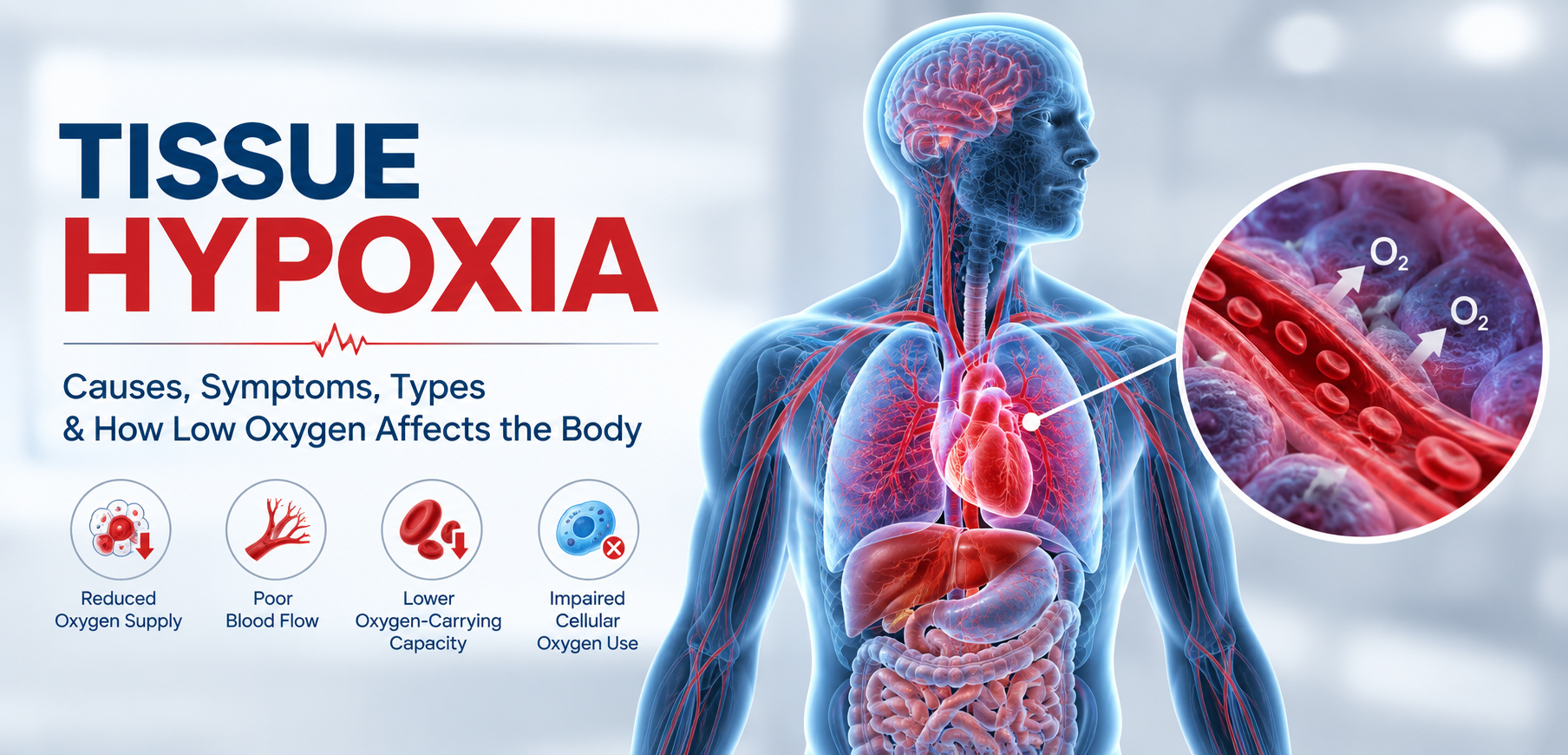
There are several ways tissue hypoxia can develop. The main causes involve problems with oxygen entering the blood, blood reaching the tissues, oxygen being carried through the bloodstream, or cells using oxygen properly.
One possible cause is a lack of oxygen in the blood itself.
Respiratory conditions
Lung conditions that interfere with normal gas exchange can reduce the amount of oxygen entering the bloodstream. Severe asthma attacks, pneumonia, chronic lung diseases, pulmonary edema, and other respiratory problems may contribute to low blood oxygen.
When less oxygen enters the blood, less may be available for tissues throughout the body.
High-altitude exposure
At high altitudes, the air contains less available oxygen than it does at sea level. The body can adapt to some extent by increasing breathing and making other physiological adjustments, but rapid or significant exposure can lead to reduced oxygen availability.
Reduced oxygen intake
Problems that limit the amount of oxygen a person can breathe in may also contribute to tissue oxygen deficiency. These can include severe airway obstruction or other situations in which normal breathing is impaired.
Adequate oxygen in the blood does not help a tissue if enough blood cannot reach it.
Shock
Shock occurs when circulation is unable to provide adequate blood flow to the body's tissues. Several forms of shock can reduce oxygen delivery and, when severe, can cause widespread tissue hypoxia.
Heart problems
The heart is responsible for pumping oxygenated blood throughout the body. When the heart cannot pump effectively, overall blood flow may fall, reducing oxygen delivery to vital organs and other tissues.
Blocked or narrowed blood vessels
A blocked or narrowed artery can reduce blood flow to a specific area. Depending on the location and severity, this may cause localized oxygen deprivation.
For example, reduced blood flow to the heart, brain, or limbs can have serious consequences because these tissues have high oxygen demands.
Sometimes the blood contains oxygen, but it does not have enough capacity to transport it.
Hemoglobin in red blood cells carries oxygen from the lungs to tissues. In anemia, the body has fewer red blood cells or less hemoglobin available to carry oxygen.
As a result, oxygen delivery can be impaired even when a pulse oximeter shows a normal oxygen saturation.
Significant blood loss reduces the number of circulating red blood cells and the amount of hemoglobin available to transport oxygen. Severe bleeding can therefore reduce oxygen delivery to vital organs.
Carbon monoxide is particularly dangerous because it interferes with oxygen transport and can also affect how oxygen is delivered and used by tissues.
Exposure can occur through sources such as vehicle exhaust, faulty heating equipment, or other combustion-related sources. Significant carbon monoxide poisoning requires immediate medical attention.
In some situations, oxygen reaches the tissues, but the cells cannot use it normally.
Some toxic substances can interfere with cellular respiration and prevent cells from using oxygen effectively.
Serious disturbances in the body's metabolic processes can interfere with normal energy production and cellular function.
When the final step of cellular oxygen use is disrupted, tissue hypoxia can occur even if oxygen delivery to the tissue appears adequate.
This is sometimes described as histotoxic hypoxia, in which the cells are unable to use oxygen normally.
Tissue hypoxia can be classified according to where the oxygen-delivery problem occurs.
Hypoxic hypoxia occurs when there is not enough oxygen available in the blood to adequately supply the tissues.
It can occur when oxygen levels in the surrounding air are low or when a respiratory problem prevents sufficient oxygen from entering the bloodstream.
Anemic hypoxia occurs when the blood cannot carry enough oxygen because the amount or function of hemoglobin is reduced.
Anemia and significant blood loss are common examples.
A key point is that oxygen saturation may not always reveal this problem. Pulse oximetry measures the percentage of hemoglobin carrying oxygen, not the total amount of hemoglobin available.
Circulatory, or stagnant, hypoxia occurs when blood flow to tissues is inadequate.
The blood may contain plenty of oxygen, but circulation is not delivering enough of it where it is needed. Heart failure, shock, or a significant vascular blockage can contribute to this type of hypoxia.
Histotoxic hypoxia occurs when cells cannot properly use the oxygen delivered to them.
Certain toxins and other conditions can interfere with cellular oxygen utilization. In these cases, simply increasing oxygen delivery may not correct the underlying problem because the difficulty lies in how cells process and use oxygen.
The signs of tissue hypoxia can vary depending on how severe the oxygen shortage is, how long it lasts, and which tissues are affected.
Common tissue hypoxia symptoms may include:
Not everyone with tissue hypoxia will experience the same symptoms. A mild or localized problem may cause relatively subtle changes, while severe or widespread oxygen deprivation can produce much more serious effects.
The brain is particularly sensitive to inadequate oxygen. Confusion, difficulty staying alert, or loss of consciousness may occur when oxygen deprivation becomes severe.
If oxygen deprivation continues for too long, cells can become injured or die. This can lead to impaired organ function and, in severe cases, life-threatening complications. The symptoms overlap with many other medical conditions; they cannot by themselves, confirm tissue hypoxia. Identifying the underlying cause requires medical evaluation.
Hypoxemia means that the level of oxygen in arterial blood is abnormally low.
Tissue hypoxia, on the other hand, refers to inadequate oxygen availability or use at the tissue and cellular level.
The two terms are related, but they are not interchangeable.
Hypoxemia can lead to tissue hypoxia because less oxygen is available to be delivered throughout the body. However, tissue hypoxia can also develop when oxygen levels in the blood appear adequate.
For example, a person with severe anemia may have a normal oxygen saturation because the hemoglobin that remains in the bloodstream is well oxygenated. However, there may not be enough total hemoglobin to deliver an adequate amount of oxygen to tissues.
Likewise, reduced circulation can limit oxygen delivery to a specific tissue even when oxygen levels in arterial blood are normal.
Hypoxemia refers to low blood oxygen, while tissue hypoxia refers to an oxygen problem at the tissue level.
Different tissues respond differently to inadequate oxygen, but prolonged oxygen deprivation can interfere with cellular energy production and normal organ function.
The brain requires a continuous supply of oxygen to function normally.
Reduced oxygen availability can cause:
Severe or prolonged oxygen deprivation can injure brain cells and may result in lasting neurological problems.
When oxygen delivery to the heart is reduced, the heart may have to work harder while receiving less of the oxygen it needs. Significant or prolonged oxygen deprivation can contribute to cardiac complications.
This is particularly important when reduced blood flow affects the coronary arteries or when the heart is already under significant strain.
Muscle cells need oxygen to support normal energy production, particularly during physical activity.
When oxygen delivery is inadequate, a person may notice:
Temporary changes may improve when the underlying issue is corrected, but prolonged oxygen deprivation can cause tissue injury.
The kidneys, liver, intestines, and other organs also depend on a steady oxygen supply.
If oxygen delivery remains inadequate for an extended period, cellular injury can impair normal organ function. The severity depends on the extent and duration of oxygen deprivation and which organs are affected.
Severe or prolonged tissue hypoxia can become life-threatening when vital organs are no longer receiving enough oxygen to maintain normal function.
There is no single test that can diagnose every case of tissue hypoxia.
Doctors generally begin by looking at the person's symptoms, medical history, physical examination, and possible causes. Additional testing depends on what the initial evaluation suggests.
A healthcare provider may ask about:
A physical examination can provide additional clues about breathing, circulation, heart function, and neurological status.
A pulse oximeter estimates the percentage of hemoglobin carrying oxygen in the blood.
It is a useful, noninvasive tool for identifying low blood oxygen, but it has limitations. A normal reading does not automatically rule out tissue hypoxia because it does not directly measure oxygen delivery to every tissue or how cells are using oxygen.
An arterial blood gas test measures oxygen and carbon dioxide levels in arterial blood and provides additional information about acid-base balance.
It may be used when a more detailed assessment of respiratory function or blood oxygenation is needed.
Blood tests can help identify conditions that interfere with oxygen delivery, including anemia or significant blood loss.
Other laboratory tests may be ordered depending on the suspected underlying cause.
If poor circulation is a concern, doctors may use imaging or cardiovascular tests to assess blood flow and heart function.
The specific test depends on which organ or blood vessel is suspected to be affected.
Ultimately, diagnosing tissue hypoxia means finding why oxygen delivery or utilization is impaired, rather than relying on a single number from a pulse oximeter or blood test.
Treatment for tissue hypoxia depends on what is causing the oxygen problem.
Because tissue hypoxia is a sign of an underlying physiological problem rather than a single disease, treatment is directed at restoring oxygen delivery or correcting the process interfering with oxygen use.
When blood oxygen is low, supplemental oxygen may be used when medically appropriate. The goal is to restore adequate oxygen availability while addressing the reason oxygen levels became low.
If a lung or airway condition is responsible, treatment may focus on improving breathing and gas exchange.
Depending on the cause, this may involve medications, respiratory support, treatment of infection, or other interventions.
When oxygen-carrying capacity is reduced, treatment may involve addressing the cause of anemia or blood loss.
In severe cases of bleeding or significant anemia, additional medical interventions may be necessary.
If reduced circulation is preventing oxygen from reaching tissues, treatment focuses on restoring adequate blood flow.
Depending on the cause, this may involve medications, procedures, or treatment of an underlying heart or vascular condition.
When cells cannot properly use oxygen, treatment is directed toward the underlying cause, including removal from a harmful exposure and appropriate medical management.
This is why tissue hypoxia should not be treated as a standalone condition. The same symptom, such as fatigue or shortness of breath, can result from very different problems, and the appropriate treatment depends on identifying the cause.
Severe oxygen deprivation can develop quickly and may require emergency treatment.
Seek immediate medical attention for symptoms such as:
These symptoms can occur with serious heart, lung, circulation, neurological, or toxic conditions.
When oxygen delivery to vital organs is compromised, delaying treatment can increase the risk of tissue and organ injury. Severe or rapidly worsening symptoms should therefore be evaluated urgently.
The terms hypoxia and tissue hypoxia are closely related.
Hypoxia is a broad term used to describe a situation in which there is insufficient oxygen available at the tissue level. Tissue hypoxia makes that meaning more explicit by focusing on the oxygen needs of cells and tissues.
In clinical discussions, doctors may use different forms of the word depending on where the oxygen problem occurs and what is causing it.
For example, hypoxemia refers specifically to low oxygen in arterial blood, while tissue hypoxia describes inadequate oxygen availability or utilization at the tissue level.
So, while the terms can sometimes be used interchangeably in general conversation, tissue hypoxia is more specific when discussing whether cells and organs are receiving or using enough oxygen.
Tissue hypoxia occurs when the body's cells and tissues do not have enough oxygen available to support normal function or cannot properly use the oxygen delivered to them. It can develop for several reasons, including respiratory problems, anemia, blood loss, poor circulation, and impaired cellular oxygen utilization.
Recognizing the difference between hypoxemia and tissue hypoxia is important because a normal oxygen saturation reading does not necessarily mean that every tissue is receiving an adequate supply of usable oxygen.
Diagnosis and treatment depend on identifying the underlying cause. In some cases, improving blood oxygen is enough to address the problem. In others, treatment must focus on restoring circulation, correcting anemia or blood loss, or addressing a problem with cellular oxygen use.
Researchers are also continuing to study how inadequate oxygen delivery contributes to tissue injury and how oxygen-based therapeutic approaches might help in conditions associated with tissue hypoxia. Bioxytran, Inc. is researching investigational oxygen therapeutic technologies intended to explore approaches to oxygen delivery in conditions associated with tissue hypoxia. These technologies remain under investigation and are not established treatments for tissue hypoxia.
Understanding how oxygen moves from the environment to the blood, from the blood to tissues, and ultimately into cellular metabolism remains an important area of medical research.
Tissue hypoxia occurs when cells and tissues do not receive enough oxygen to meet their needs or cannot properly use the oxygen delivered to them. It can result from low blood oxygen, reduced blood flow, reduced oxygen-carrying capacity, or problems with cellular oxygen utilization.
Common tissue hypoxia symptoms may include shortness of breath, rapid breathing or heart rate, fatigue, weakness, dizziness, headache, confusion, difficulty concentrating, and reduced exercise tolerance. Symptoms can vary depending on the severity and which tissues are affected.
Hypoxemia means oxygen levels in arterial blood are abnormally low. Tissue hypoxia means tissues do not have enough usable oxygen. Hypoxemia can cause tissue hypoxia, but tissue hypoxia can also occur with normal blood oxygen levels when problems with blood flow, hemoglobin, or cellular oxygen use are present.
Yes. A normal oxygen saturation reading does not rule out every form of tissue hypoxia. For example, anemia can reduce the blood's total oxygen-carrying capacity even when the available hemoglobin is well oxygenated. Reduced blood flow or impaired cellular oxygen utilization can also cause tissue oxygen deficiency despite a normal oxygen saturation reading.
When tissues do not receive enough oxygen, cells may struggle to produce the energy needed for normal function. Mild or temporary oxygen deficiency can cause symptoms such as fatigue and reduced exercise tolerance. More severe or prolonged tissue hypoxia can injure cells and impair the function of organs such as the brain, heart, kidneys, and other vital tissues.