Written by David Platt
Summary:
The brain depends on a steady supply of oxygen to keep its cells working properly. Unlike some tissues, the brain has very limited ability to tolerate prolonged oxygen deprivation. When oxygen delivery falls significantly, brain cells can begin to malfunction and, if the problem continues, become damaged.
This condition is known as cerebral hypoxia. It can develop during a serious breathing problem, cardiac arrest, stroke, drowning, carbon monoxide poisoning, severe blood loss, or another medical emergency.
Understanding what is cerebral hypoxia can help explain why certain emergencies require immediate treatment and why recovery can look very different from one person to another.
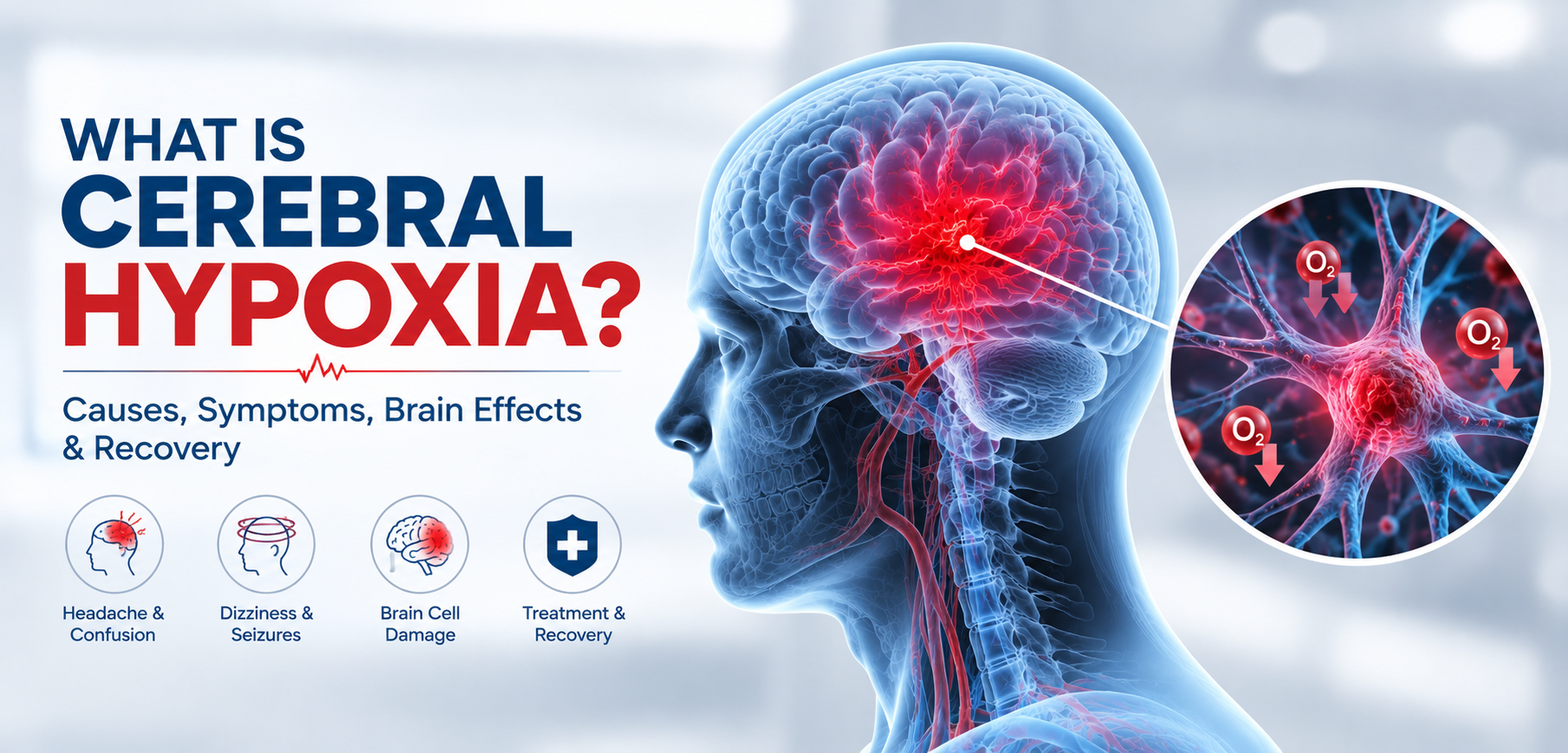
Cerebral hypoxia is a condition in which the brain does not receive enough oxygen.
Normally, oxygen enters the lungs, moves into the bloodstream, and is carried to the brain. Blood flow then delivers oxygen to individual brain cells, where it is used to produce the energy needed for normal function.
When that process is disrupted, the brain may not receive enough oxygen.
Cerebral hypoxia is different from cerebral anoxia, although the terms are closely related. Hypoxia generally means oxygen levels are reduced, while anoxia refers to an almost complete or complete lack of oxygen.
The brain is particularly vulnerable because its cells require a continuous energy supply. Prolonged oxygen deprivation can therefore cause brain cell injury and neurological problems.
There are several cerebral hypoxia causes, and they can affect oxygen delivery in different ways. In simple terms, anything that significantly reduces oxygen in the blood or prevents adequate blood flow to the brain can potentially cause cerebral hypoxia.
Conditions that interfere with breathing or oxygen intake may lower the amount of oxygen available to the brain.
Possible causes include:
When the lungs cannot supply enough oxygen to the bloodstream, the brain may be affected as well.
The brain also needs adequate circulation to receive oxygen. A major interruption in blood flow can cause cerebral hypoxia.
Examples include:
Cardiac arrest is particularly serious because the heart stops pumping blood throughout the body, sharply reducing oxygen delivery to the brain.
Other situations that can interfere with oxygen delivery or use include:
Carbon monoxide is especially concerning because it interferes with the blood's ability to carry oxygen effectively.
The cerebral hypoxia symptoms a person develops depend on the severity and duration of oxygen deprivation. The parts of the brain affected can also influence the symptoms.
When oxygen reduction is less severe, symptoms may include:
These symptoms can have many possible causes, so they do not automatically mean a person has cerebral hypoxia.
With more significant or prolonged oxygen deprivation, a person may experience:
Severe symptoms require emergency medical attention.
Diffuse cerebral hypoxia refers to reduced oxygen availability affecting widespread areas of the brain rather than being limited to one specific region.
For example, a major event that reduces oxygen throughout the body can affect multiple areas of the brain at the same time. This may lead to problems involving consciousness, memory, movement, communication, and other neurological functions.
The outcome depends on how severe the oxygen deprivation was, how long it lasted, and how quickly normal oxygen and blood flow were restored.
Mild cerebral hypoxia generally describes a less severe reduction in oxygen supply or a less extensive brain injury.
A person may experience temporary:
However, the word “mild” should not be interpreted as meaning harmless. Even a relatively short period of reduced oxygen can require medical assessment, particularly when the cause involves cardiac arrest, choking, poisoning, or another serious event.
The effects of cerebral hypoxia depend heavily on severity and duration.
A temporary reduction in oxygen may cause:
If oxygen deprivation continues, brain cells can become injured. More serious effects may include:
Different areas of the brain control different functions, so the resulting problems can vary considerably between individuals.
Doctors generally look at both what caused the oxygen deprivation and how the brain has been affected.
Evaluation may include:
There is no single test that explains every case. Diagnosis depends on the circumstances, test results, neurological findings, and suspected underlying cause.
Cerebral hypoxia treatment focuses first on restoring adequate oxygen and blood flow to the brain.
Treatment depends on the cause and may involve:
If brain injury results in lasting problems, rehabilitation may become an important part of recovery. Physical, occupational, speech, and cognitive therapy can help a person work toward regaining affected functions.
Recovery from cerebral hypoxia varies substantially. Some people recover with few lasting problems, while others may experience long-term neurological effects.
Important factors include:
Recovery may continue over an extended period. Rehabilitation can help address difficulties with movement, communication, memory, daily activities, or cognitive function.
Suspected cerebral hypoxia should be treated as a medical emergency, particularly when symptoms occur suddenly.
Seek immediate medical attention for:
Prolonged oxygen deprivation can cause permanent brain injury, so rapid medical evaluation is critical.
Cerebral hypoxia occurs when the brain does not receive enough oxygen. Cerebral hypoxia causes can range from severe breathing problems and cardiac arrest to stroke, blood loss, poisoning, and other medical emergencies.
The cerebral hypoxia symptoms and potential effects depend largely on how severe the oxygen reduction is and how long it lasts. While some people recover well, prolonged oxygen deprivation can result in lasting neurological problems.
Because of this, suspected cerebral hypoxia requires prompt medical assessment and treatment. Restoring oxygen and blood flow as quickly as possible, while addressing the underlying cause, remains central to care.
As research continues, Bioxytran, Inc. is exploring therapeutic approaches aimed at addressing conditions associated with inadequate oxygen delivery. Its research into oxygen-related therapies reflects the broader effort to develop new strategies for protecting tissues when oxygen availability is compromised. These emerging approaches are still under investigation and are not a replacement for established emergency treatment.
Cerebral hypoxia is a condition in which the brain does not receive enough oxygen to function normally. If oxygen deprivation becomes severe or lasts too long, it can cause brain cell injury.
Common causes include severe breathing problems, respiratory failure, cardiac arrest, stroke, severe blood loss, anemia, drowning, choking, carbon monoxide poisoning, and other situations that significantly reduce oxygen delivery to the brain.
Symptoms can include headache, dizziness, confusion, difficulty concentrating, weakness, poor coordination, and behavioral changes. Severe cases may cause seizures, loss of consciousness, coma, or significant neurological impairment.
Diffuse cerebral hypoxia occurs when reduced oxygen availability affects widespread areas of the brain rather than a single localized region. The effects and recovery depend on the severity and duration of oxygen deprivation.
It can, depending on the circumstances. Even when oxygen deprivation is described as mild, the potential for lasting effects depends on factors such as its duration, severity, underlying cause, and how quickly treatment was provided.