Bioxytran, Inc. is developing investigational galectin-targeted technologies designed to study the role of Galectin-3 in viral diseases, inflammation, fibrosis, immune regulation, and tissue injury.
Galectin-3 is a carbohydrate-binding protein belonging to the galectin family of lectins. It is expressed in numerous cell types, including macrophages, neutrophils, epithelial cells, fibroblasts, and activated immune cells. Galectin-3 participates in a wide range of biological processes, including cell signaling, immune activation, inflammatory responses, tissue remodeling, and fibrosis.
Researchers increasingly recognize that Galectin-3 plays a central role in many acute and chronic diseases. Elevated Galectin-3 expression has been observed in cardiovascular disease, liver disease, pulmonary fibrosis, kidney disease, cancer, viral infections, and several inflammatory disorders.
As a result, Galectin-3 has emerged as both a promising biomarker and an important investigational therapeutic target.
Traditional therapies often address disease after significant tissue damage has already occurred. Galectin-focused research seeks to better understand whether modulating Galectin-3 activity may influence disease progression earlier in the pathological process.
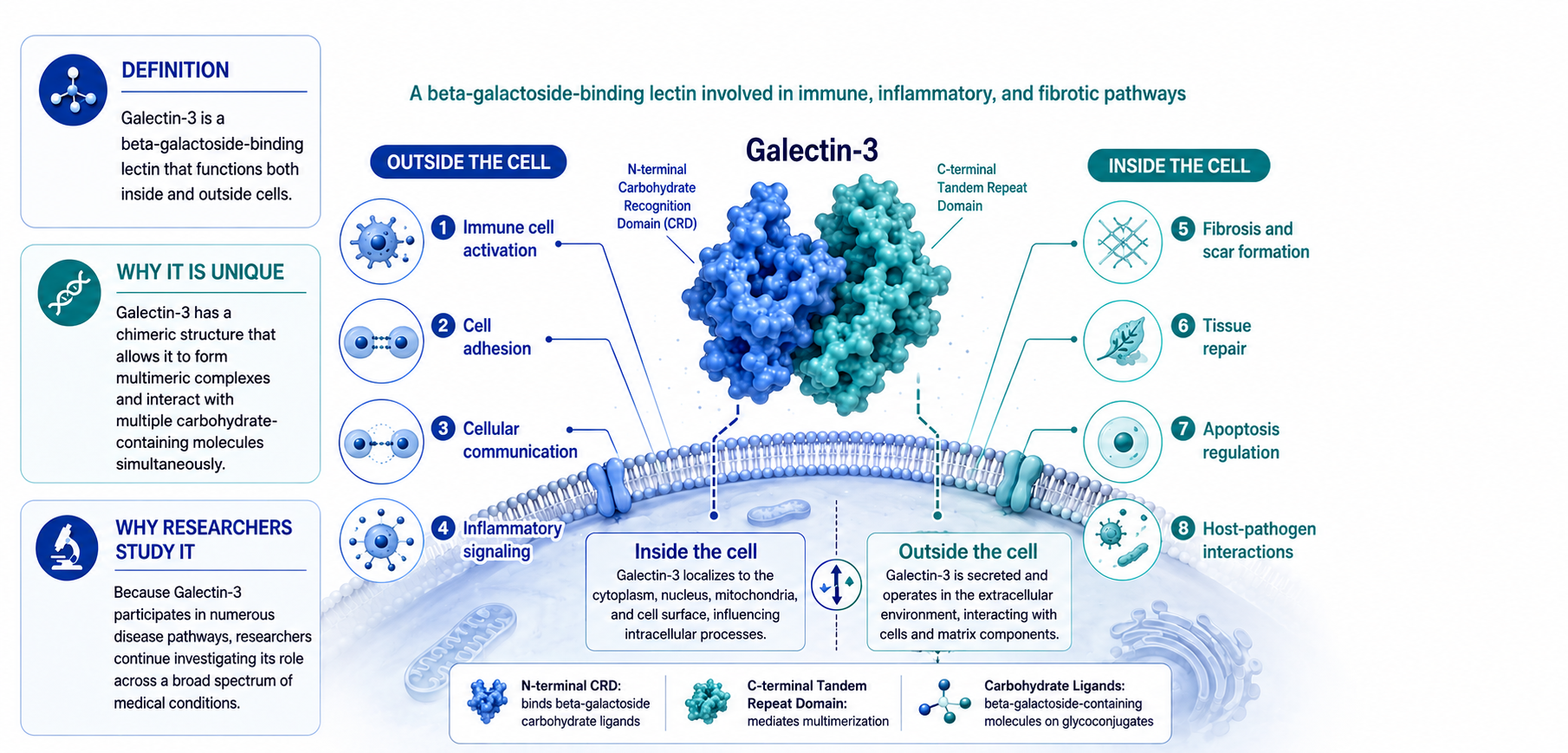
For individuals asking, "What is Galectin-3?", Galectin-3 is a beta-galactoside-binding lectin that functions both inside and outside cells.
Galectin-3 influences numerous biological pathways, including:
Galectin-3 is unique among galectins because it possesses a chimeric structure that allows it to form multimeric complexes capable of interacting with multiple carbohydrate-containing molecules simultaneously.
Because Galectin-3 participates in numerous disease pathways, researchers continue investigating its role across a broad spectrum of medical conditions.
Many existing therapies attempt to manage symptoms or address tissue injury after disease progression has already occurred.
Galectin-targeted research investigates whether earlier intervention at the level of inflammatory and fibrotic signaling pathways may alter disease processes before irreversible tissue damage develops.
Investigational Galectin-3 antagonists are designed to interact directly with Galectin-3 and potentially interrupt biological processes associated with:
Researchers continue evaluating whether targeting Galectin-3 may provide broad therapeutic applications across multiple diseases.
Galectin-3 participates in numerous physiological and pathological processes throughout the body.
Galectin-3 is highly expressed by activated macrophages and other inflammatory cells. During tissue injury, Galectin-3 levels often increase as immune cells migrate to sites of inflammation.
Elevated Galectin-3 expression has been associated with:
Recent preclinical studies suggest that Galectin-3 may serve as an early marker of inflammatory activity before extensive tissue destruction becomes apparent.
Fibrosis refers to excessive accumulation of scar tissue following chronic injury or inflammation.
Galectin-3 is increasingly recognized as an important mediator of fibrotic pathways. Increased Galectin-3 expression has been observed in:
Researchers believe Galectin-3 may promote fibroblast activation, extracellular matrix deposition, and tissue remodeling.
Consequently, Galectin-3 inhibition has become an active area of therapeutic investigation in fibrotic diseases.
Galectin-3 also plays an important role in host-pathogen interactions.
Studies suggest that Galectin-3 may influence:
Because Galectin-3 participates in both antiviral defense and inflammatory injury pathways, researchers continue evaluating how Galectin modulation may influence infectious diseases.
The galectin 3 blood test measures circulating levels of Galectin-3 in serum or plasma.
Galectin-3 blood testing has received significant attention because elevated circulating levels may reflect ongoing inflammatory, fibrotic, or tissue remodeling processes.
Clinical and research applications of Galectin-3 blood testing include:
Investigators are also evaluating whether serum Galectin-3 levels may serve as early biomarkers in acute tissue injury.
Recent animal studies have demonstrated that circulating Galectin-3 levels may rise during the early stages of acute liver injury and correlate with inflammatory macrophage infiltration within liver tissue.
Although Galectin-3 testing is increasingly utilized in research and selected clinical settings, interpretation should always occur in conjunction with clinical evaluation and additional diagnostic findings.
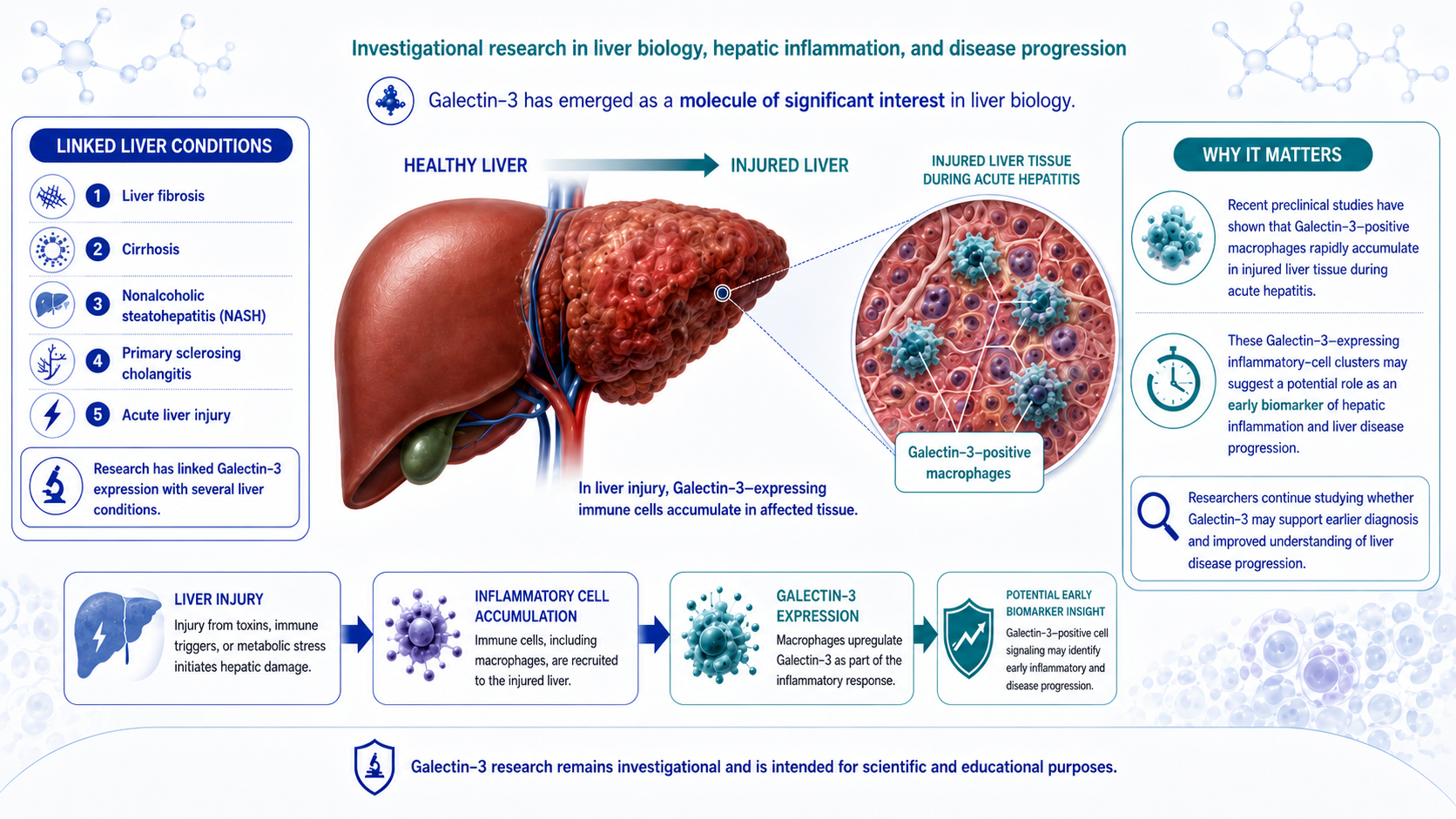
Galectin-3 has emerged as a molecule of significant interest in liver biology.
Research has linked Galectin-3 expression with several liver conditions, including:
Recent preclinical studies have demonstrated that Galectin-3-positive macrophages rapidly accumulate in injured liver tissue during acute hepatitis. Investigators observed characteristic clusters of Galectin-3-expressing inflammatory cells during the early phase of liver injury, suggesting a potential role for Galectin-3 as an early biomarker of hepatic inflammation.
Researchers continue studying whether Galectin-3 may support earlier diagnosis and improved understanding of liver disease progression.
Because Galectin-3 participates in numerous disease pathways, significant effort has focused on developing a galectin 3 inhibitor capable of modulating these biological processes.
Investigational Galectin-3 inhibitors are being studied for their potential ability to:
Several carbohydrate-based and small-molecule approaches are currently under investigation.
Bioxytran's proprietary platform utilizes carbohydrate chemistry designed to target galectin-mediated biological processes.
The field of galectin 3 inhibitor clinical trial research continues to expand.
Clinical and preclinical studies are currently evaluating Galectin-3-targeted therapies across multiple disease categories, including:
Researchers are investigating whether Galectin-3 inhibition may:
Many Galectin-3-directed therapies remain investigational and have not yet received regulatory approval for widespread clinical use.
Bioxytran's investigational platform is built upon proprietary carbohydrate chemistry designed to target galectin-mediated pathways.
The company's technologies are being developed to investigate how galectin antagonism may influence:
Bioxytran's lead investigational therapeutic, ProLectin-M, has been studied for its ability to interact with galectin-mediated viral pathways.
The company's broader platform continues exploring how galectin antagonism and carbohydrate-based therapeutics may contribute to future advances in antiviral research and immune modulation.
Galectin-3 biology continues to represent a rapidly evolving scientific field.
Current areas of ongoing research include:
Researchers increasingly recognize that Galectin-3 occupies a central position at the intersection of inflammation, fibrosis, immunity, and disease progression.
Through its investigational platform, Bioxytran, Inc. continues exploring how Galectin-3-targeted technologies may contribute to future therapeutic innovation.


