Written by David Platt
Summary:
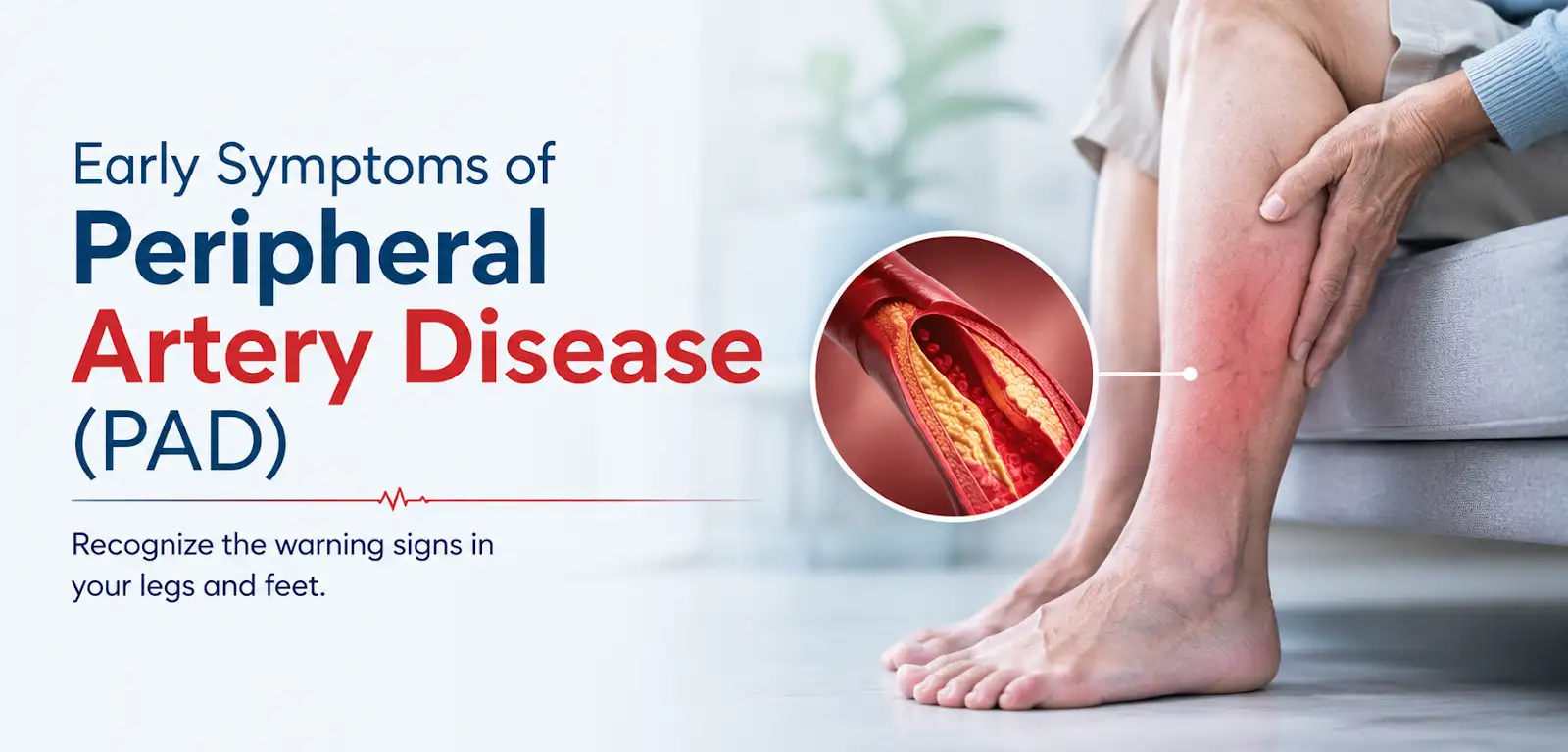
Peripheral artery disease (PAD) is a circulatory condition that develops when fatty deposits, known as plaque, build up inside the arteries supplying blood to the arms and legs. Most commonly, PAD affects the lower extremities, reducing blood flow to the muscles, skin, and nerves.
Many people searching what is peripheral artery disease are surprised to learn that it is one of the most common forms of peripheral vascular disease. While the terms are often used interchangeably, peripheral vascular disease is a broader category that includes disorders affecting both arteries and veins, whereas PAD specifically refers to narrowed peripheral arteries.
When blood flow becomes restricted, the legs and feet receive less oxygen and fewer nutrients. Over time, this can cause pain, delayed wound healing, skin changes, and, in severe cases, tissue damage.
Common risk factors include:
Recognizing peripheral artery disease symptoms early allows treatment to begin before serious complications develop.
Many early signs of PAD develop gradually and are often mistaken for normal aging or muscle fatigue.
One of the hallmark peripheral artery disease symptoms is intermittent claudication.
People often notice aching, cramping, or tightness in the calves, thighs, or buttocks while walking. The discomfort typically improves after resting for a few minutes because the muscles require less oxygen when inactive.
As the disease progresses, the distance someone can walk before experiencing pain usually becomes shorter.
Reduced circulation often causes one foot or leg to feel noticeably colder than the other.
Poor blood flow limits the body's ability to regulate temperature in the affected limb, making cold feet one of the earliest warning signs of PAD.
When muscles and nerves receive less oxygen-rich blood, they may not function normally.
This can lead to:
These symptoms often worsen during physical activity.
One of the most concerning signs of foot early stage peripheral artery disease is delayed wound healing.
Small cuts, blisters, or scrapes that normally heal within days may remain open for weeks because reduced circulation limits the body's natural healing process.
People with diabetes face an even greater risk of infection and foot ulcers.
Poor circulation may cause the skin to become:
These changes occur because tissues receive inadequate oxygen.
Reduced blood supply can also affect hair follicles.
Many patients gradually notice thinning or complete hair loss on the lower legs, ankles, or feet long before more severe symptoms develop.
Healthcare providers often check pulses near the ankles and feet during a physical examination.
A weak or absent pulse may indicate significant narrowing of the arteries supplying the lower limbs.
The feet are often among the first areas affected when circulation decreases.
People experiencing poor circulation foot early stage peripheral artery disease may notice:
For individuals with diabetes, these circulation problems significantly increase the risk of infections and foot ulcers, making regular foot examinations especially important.
As arterial narrowing becomes more severe, symptoms may occur even while resting.
Common blocked artery in leg symptoms include:
These symptoms require immediate medical evaluation because prolonged loss of blood flow can threaten the affected limb.
Although anyone can develop PAD, certain factors increase the likelihood of disease.
Major risk factors include:
Managing these risk factors can significantly reduce the chance of developing PAD symptoms in legs later in life.
Doctors use several tests to diagnose PAD and evaluate blood flow.
Common diagnostic methods include:
Early diagnosis allows treatment to begin before permanent tissue damage occurs.
Several effective peripheral artery disease treatments are available depending on disease severity.
Lifestyle improvements are often the first step in treatment.
These include:
Regular physical activity helps improve circulation and walking ability in many patients.
Doctors may prescribe medications to reduce cardiovascular risk and improve circulation, including:
Treatment plans are individualized based on each patient's health and risk factors.
Patients with significant arterial blockage may benefit from minimally invasive procedures.
If you're wondering what is the treatment for blocked arteries in the legs is, common options include:
These procedures help restore blood flow without major surgery.
For severe disease, surgery may become necessary.
Procedures include:
These operations are typically reserved for patients with advanced PAD or limb-threatening ischemia.
Many patients ask, can peripheral artery disease be reversed?
Current evidence shows that plaque buildup inside the arteries generally cannot be completely eliminated. However, disease progression can often be slowed—or even stabilized—with early treatment.
Healthy lifestyle changes, appropriate medications, and timely procedures can improve circulation, reduce symptoms, and lower the risk of heart attack, stroke, and limb complications.
The earlier PAD is diagnosed, the better the long-term outcomes tend to be.
Seek medical evaluation if you experience:
Prompt diagnosis can help prevent permanent tissue damage and improve treatment success.
Researchers continue exploring new ways to reduce tissue injury caused by prolonged oxygen deprivation in circulatory diseases.
One growing area of investigation focuses on improving oxygen delivery to tissues affected by severe ischemia. Restoring oxygen more effectively may help limit damage when blood flow is significantly reduced.
Bioxytran, Inc. is investigating oxygen therapeutic technologies designed to study new approaches for improving oxygen delivery during conditions associated with tissue hypoxia. These investigational technologies are being researched for their potential role in reducing tissue injury but have not been approved as treatments for peripheral artery disease.
As research advances, these innovative approaches may contribute to future strategies for managing severe vascular disease and tissue hypoxia.
Early peripheral artery disease symptoms are often subtle, but recognizing them can make a significant difference. Leg pain during walking, cold feet, numbness, delayed wound healing, and skin changes should never be ignored.
With timely diagnosis, effective peripheral artery disease treatments, and careful management of cardiovascular risk factors, many people can slow disease progression and maintain an active lifestyle.
If you notice symptoms of poor circulation or PAD symptoms in legs, consult your healthcare provider or a vascular specialist. Early intervention remains the best approach for protecting circulation, preserving limb health, and reducing long-term cardiovascular risk.
The earliest symptoms often include leg pain while walking, cold feet, numbness, slow-healing wounds, weak pulses, and skin color changes.
Peripheral artery disease is a condition in which narrowed arteries reduce blood flow to the legs and feet, leading to pain, poor circulation, and an increased risk of serious vascular complications.
While plaque buildup usually cannot be completely reversed, early treatment, lifestyle changes, and medications can slow progression and improve circulation.
Common blocked artery in leg symptoms include severe leg pain, pain at rest, cold feet, non-healing ulcers, skin discoloration, and, in advanced cases, gangrene.
Treatment depends on severity and may include lifestyle changes, medications, angioplasty, stenting, atherectomy, or bypass surgery to restore blood flow.