Bioxytran, Inc. is developing an investigational oxygen transport platform designed to support oxygen delivery in hypoxic and ischemic conditions where tissues become deprived of oxygen. One area of interest is stroke, a medical emergency that occurs when blood flow to part of the brain becomes interrupted or reduced.
For those asking what is stroke, it is a condition in which brain cells begin to suffer damage because they no longer receive enough oxygen and nutrients. Since brain tissue depends on a constant oxygen supply, even a short interruption can trigger injury.
When oxygen levels fall, affected brain cells begin losing function. If blood flow is not restored quickly, some cells may become permanently damaged.
Many current stroke treatments focus on restoring circulation, removing blockages, preventing further injury, and supporting recovery. However, oxygen deprivation remains one of the most important challenges during a stroke event.
The brain represents only a small percentage of total body weight, yet it consumes a significant amount of the body's oxygen supply.
Under normal conditions, red blood cells carry oxygen through blood vessels and deliver it to brain tissue.
During a stroke, blood flow may become restricted or interrupted. As oxygen delivery declines, brain cells begin experiencing hypoxia.
The longer oxygen deprivation continues, the greater the potential for neurological damage.
Bioxytran's investigational oxygen carrier, BXT-25, is being developed to transport oxygen through circulation and release it directly into oxygen-deprived tissues.
Unlike traditional red blood cells, the molecule is approximately 5,000 times smaller and is designed to move through narrowed or partially obstructed microvascular pathways.
The company is evaluating whether improved oxygen transport may help support tissues affected by ischemic and hypoxic conditions.
Stroke remains one of the leading causes of disability and death worldwide.
Because brain tissue requires a continuous oxygen supply, interruptions in blood flow can rapidly lead to cellular injury and neurological dysfunction.
Bioxytran's investigational oxygen transport platform is currently being explored in conditions characterized by acute oxygen deprivation and impaired tissue perfusion.
Current areas of scientific interest include:
Rapid medical evaluation remains critical because treatment effectiveness often depends on how quickly oxygen delivery and circulation are restored.
Researchers continue studying whether novel oxygen transport approaches may help support tissues affected by ischemic and hypoxic injury.
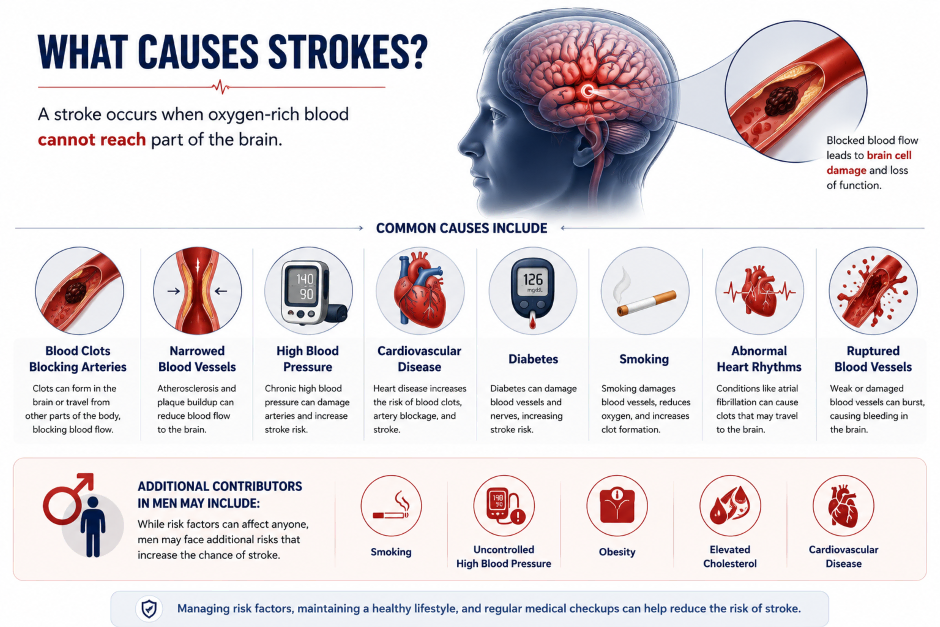
Many people ask what causes strokes.
A stroke occurs when oxygen-rich blood cannot reach part of the brain.
Common causes include:
Although risk factors overlap between genders, what causes strokes in men may often involve additional contributors such as smoking, uncontrolled blood pressure, obesity, elevated cholesterol, and cardiovascular disease.
Ischemic stroke is the most common type.
It occurs when a blood clot blocks an artery supplying the brain.
Reduced blood flow limits oxygen delivery and may cause rapid tissue injury.
A hemorrhagic stroke occurs when a blood vessel ruptures and bleeds into surrounding brain tissue. The bleeding increases pressure inside the skull and disrupts normal circulation. Unlike many clot-related therapies, treatment approaches differ significantly for hemorrhagic strokes.
Because BXT-25 is being developed as an oxygen-transport therapeutic rather than a blood thinner, the company believes future research may explore applications in both ischemic and hemorrhagic conditions.
Often called a mini-stroke, a TIA involves a temporary interruption of blood flow.
Symptoms may resolve quickly, but TIAs can serve as warning signs for future strokes.
Recognizing stroke symptoms early may improve outcomes.
Symptoms often appear suddenly.
Common stroke symptoms include:
Many healthcare professionals encourage using the FAST method:
F – Face drooping
A – Arm weakness
S – Speech difficulty
T – Time to call emergency services
These are among the most common signs of a stroke that require immediate medical attention.
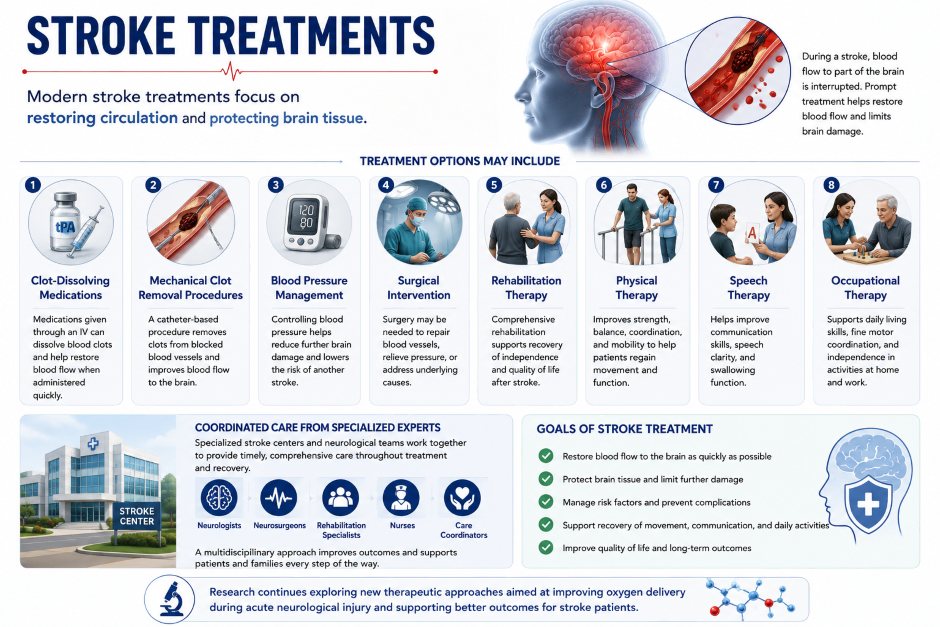
Modern stroke treatments focus on restoring circulation and protecting brain tissue.
Treatment options may include:
Specialized stroke centers and neurological teams often coordinate care throughout treatment and recovery.
Research continues exploring new therapeutic approaches aimed at improving oxygen delivery during acute neurological injury.
Bioxytran's investigational oxygen transport molecule, BXT-25, is being developed as a universal oxygen carrier designed to transport oxygen independently of red blood cells.
Preclinical studies have demonstrated:
Because the molecule is significantly smaller than red blood cells, researchers are evaluating whether it may reach oxygen-deprived regions that traditional circulation struggles to access.
Future clinical studies will be needed to evaluate safety and effectiveness in human stroke patients.
Many neurological and degenerative diseases involve impaired oxygen delivery and tissue hypoxia.
Future research areas being explored include:
Through its investigational oxygen transport platform, Bioxytran, Inc. continues exploring innovative approaches designed to support oxygen delivery in conditions where tissue hypoxia contributes to disease progression.


