Kidney fibrosis is a progressive condition characterized by excessive scar tissue formation in the kidneys following chronic injury, inflammation, or reduced oxygen supply. The fibrosis mechanism involves the activation of inflammatory pathways, fibroblast accumulation, extracellular matrix deposition, and gradual destruction of normal kidney architecture. Over time, this process reduces the kidney’s ability to filter blood effectively and may contribute to chronic kidney disease progression and eventual kidney failure.
Bioxytran, Inc. is developing oxygen therapeutic and galectin-based platform technologies designed to address hypoxic conditions, tissue injury, and degenerative disease pathways associated with fibrosis development. The company’s research focuses on improving oxygen transport to compromised tissues while exploring galectin-related inflammatory mechanisms that may contribute to kidney fibrosis progression.
Most hypoxic and ischemic conditions may benefit from hyperbaric oxygen therapy, but treatment duration is limited because excessive oxygen exposure can increase free radical formation and oxidative damage. Typical hyperbaric treatment sessions are also time-restricted and require specialized facilities. Bioxytran’s investigational oxygen transport molecule is designed to deliver oxygen efficiently while minimizing free radical generation associated with oxygen toxicity.
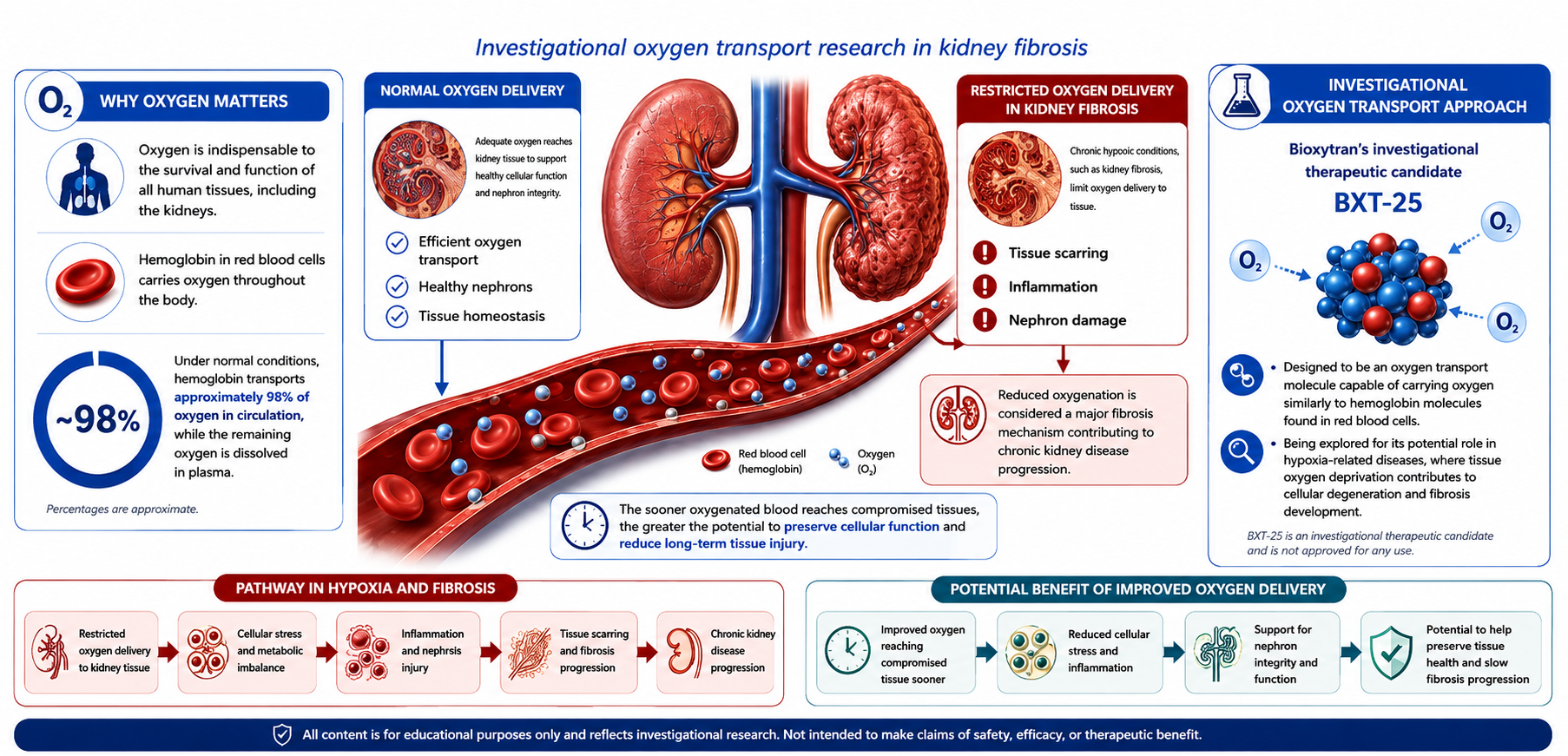
Oxygen is indispensable to the survival and function of all human tissues, including the kidneys. Hemoglobin, a protein contained within red blood cells, is responsible for carrying oxygen throughout the body. Under normal conditions, hemoglobin transports approximately 98% of oxygen in circulation, while the remaining oxygen is dissolved in plasma.
In chronic hypoxic conditions such as kidney fibrosis, restricted oxygen delivery may accelerate tissue scarring, inflammation, and nephron damage. Reduced oxygenation is considered a major fibrosis mechanism contributing to chronic kidney disease progression. The sooner oxygenated blood can reach compromised tissues, the greater the potential to preserve cellular function and reduce long-term tissue injury.
Bioxytran’s investigational therapeutic candidate, BXT-25, is designed as an oxygen transport molecule capable of carrying oxygen similarly to hemoglobin molecules found in red blood cells (RBCs). The platform is being explored for its potential role in hypoxia-related diseases, where tissue oxygen deprivation contributes to cellular degeneration and fibrosis development.
Kidney fibrosis develops when repeated injury, inflammation, and oxygen deprivation trigger excessive scar tissue formation within the kidneys. Over time, fibrosis reduces the kidney’s ability to filter waste products and regulate fluid balance. Common causes include diabetes, hypertension, ischemic injury, autoimmune disorders, and chronic inflammatory kidney diseases.
Many kidney fibrosis protocols currently focus on blood pressure control, anti-inflammatory therapies, and slowing scar tissue progression. However, impaired oxygen delivery remains a major challenge in chronic kidney disease management. Bioxytran’s oxygen therapeutic platform is being developed to support tissue oxygenation during hypoxic injury and compromised blood flow conditions.
BXT-25 is an investigational injectable oxygen therapeutic intended to deliver oxygen directly to oxygen-deprived tissues through intravenous (IV) administration. The platform is being evaluated for conditions involving ischemia, inflammation, necrosis prevention, and tissue hypoxia.
Current treatment approaches for ischemic and fibrosis-related diseases often address downstream complications, while limited options directly target oxygen deprivation within damaged tissues. Bioxytran’s oxygen transport technology is designed to function as an “oxygen bridge,” helping maintain oxygen delivery during periods of compromised circulation and tissue stress.
The BXT-25 molecule contains a co-polymer that stabilizes cross-linked hemoglobin protein subunits to function as a universal oxygen carrier. The molecule is significantly smaller than red blood cells, allowing it to circulate through restricted or partially blocked microvascular pathways where oxygen delivery may otherwise be impaired.
BXT-25 circulates through the bloodstream, collecting oxygen from the lungs and releasing oxygen into tissues affected by hypoxia or ischemia. Oxygen delivery occurs rapidly following infusion, potentially helping support cellular oxygenation during acute and chronic hypoxic conditions.
The molecule is designed with oxygen affinity that mimics natural human hemoglobin and is not expected to trigger immunogenic reactions. BXT-25 is universally compatible with all blood types and is engineered with low viscosity to support microcirculatory oxygen transport in compromised tissues.
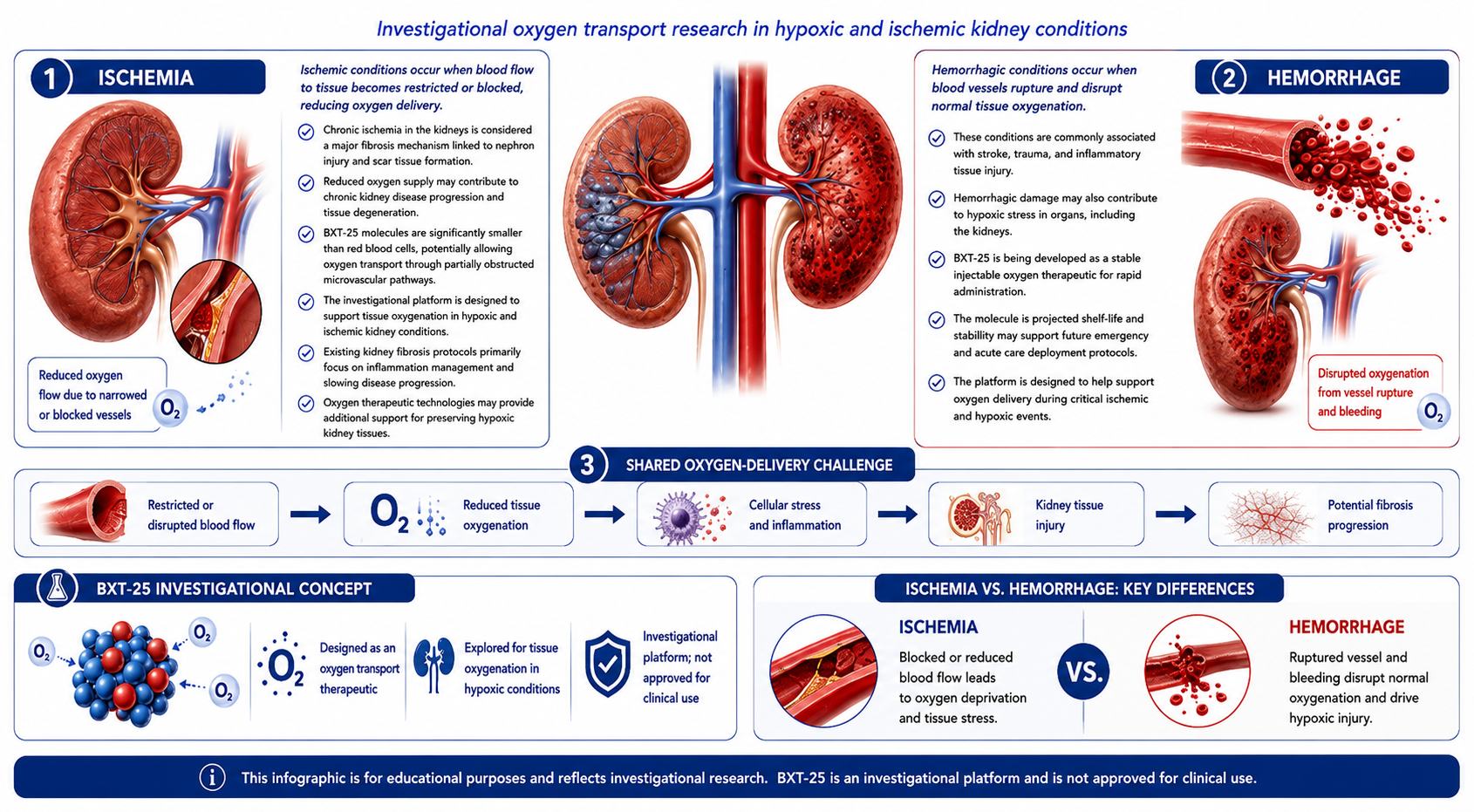
Chronic kidney disease stages are categorized based on glomerular filtration rate (GFR), which measures how efficiently the kidneys filter blood.Kidney fibrosis remains a major driver of chronic kidney disease progression and eventual renal failure. Emerging fibrosis research continues to explore how chronic inflammation, oxidative stress, tissue hypoxia, and impaired oxygen delivery contribute to long-term organ damage.
Future areas of interest for oxygen therapeutic technologies may include:
Degenerative diseases such as Alzheimer’s disease, dementia, and Parkinson’s disease have also been associated with impaired oxygen delivery and chronic inflammatory damage. Similar to kidney fibrosis mechanisms, reduced tissue oxygenation in the brain may contribute to progressive cellular dysfunction and degeneration.
By advancing investigational oxygen transport technologies, Bioxytran, Inc. continues exploring innovative approaches for tissue oxygenation, hypoxia management, and fibrosis-related disease research.
Kidney fibrosis develops when chronic inflammation, reduced oxygen supply, or repeated kidney injury triggers excessive scar tissue formation. Common causes include diabetes, hypertension, autoimmune diseases, ischemic injury, and long-term chronic kidney disease progression.
The fibrosis mechanism involves inflammation, fibroblast activation, extracellular matrix buildup, and reduced tissue oxygenation. Over time, these processes replace healthy kidney tissue with scar tissue, reducing the kidneys’ ability to filter blood effectively.
Current kidney fibrosis treatment approaches mainly focus on slowing disease progression through blood pressure management, anti-inflammatory therapies, diabetes control, and kidney-protective medications. Emerging research is also exploring oxygen therapeutic technologies designed to improve tissue oxygenation in hypoxic kidney conditions.
Kidney fibrosis protocols are designed to reduce inflammation, preserve kidney function, improve blood flow, and manage underlying causes such as diabetes or hypertension. Treatment plans may include medications, dietary management, oxygen support research, and regular kidney function monitoring.
Traditional treatments primarily focus on symptom management and slowing progression. Bioxytran’s investigational platform is exploring oxygen transport technologies designed to support tissue oxygenation during hypoxic and ischemic conditions, which are believed to contribute significantly to fibrosis development and chronic kidney disease progression.


