Bioxytran, Inc. continues to explore inflammatory and fibrotic disease pathways underlying chronic conditions in which progressive tissue damage contributes to long-term organ dysfunction. In addition to research involving fibrosis, inflammation, glycobiology, and Galectin-3, the company is evaluating how these biological mechanisms may influence diseases characterized by persistent tissue injury.
Cystic Fibrosis is a genetic disease that affects the movement of salt and water across cell membranes. Mutations in the CFTR gene can result in the production of thick, sticky mucus that accumulates throughout the body.
Many complications associated with cystic fibrosis are linked to chronic inflammation, repeated infections, and gradual tissue remodeling. Over time, these processes may contribute to fibrosis and declining organ function.
Researchers continue studying how inflammatory signaling pathways, including Galectin-3, may influence disease progression and tissue scarring in chronic diseases.
Healthy mucus helps protect tissues and remove bacteria, particles, and other unwanted substances from the body.
In cystic fibrosis, mucus becomes thicker and more difficult to clear. As mucus accumulates, inflammation may persist, and infections may become more frequent.
Repeated cycles of inflammation and tissue repair can contribute to structural changes within affected organs.
Inflammation remains an important area of research because prolonged immune activity may influence fibrosis development and long-term disease progression.
Fibrosis refers to the formation of excess scar tissue following ongoing injury and repair.
Many chronic diseases, including cystic fibrosis, involve inflammatory pathways that may contribute to tissue remodeling over time.
Researchers continue investigating how proteins involved in fibrosis and immune regulation influence chronic disease progression.
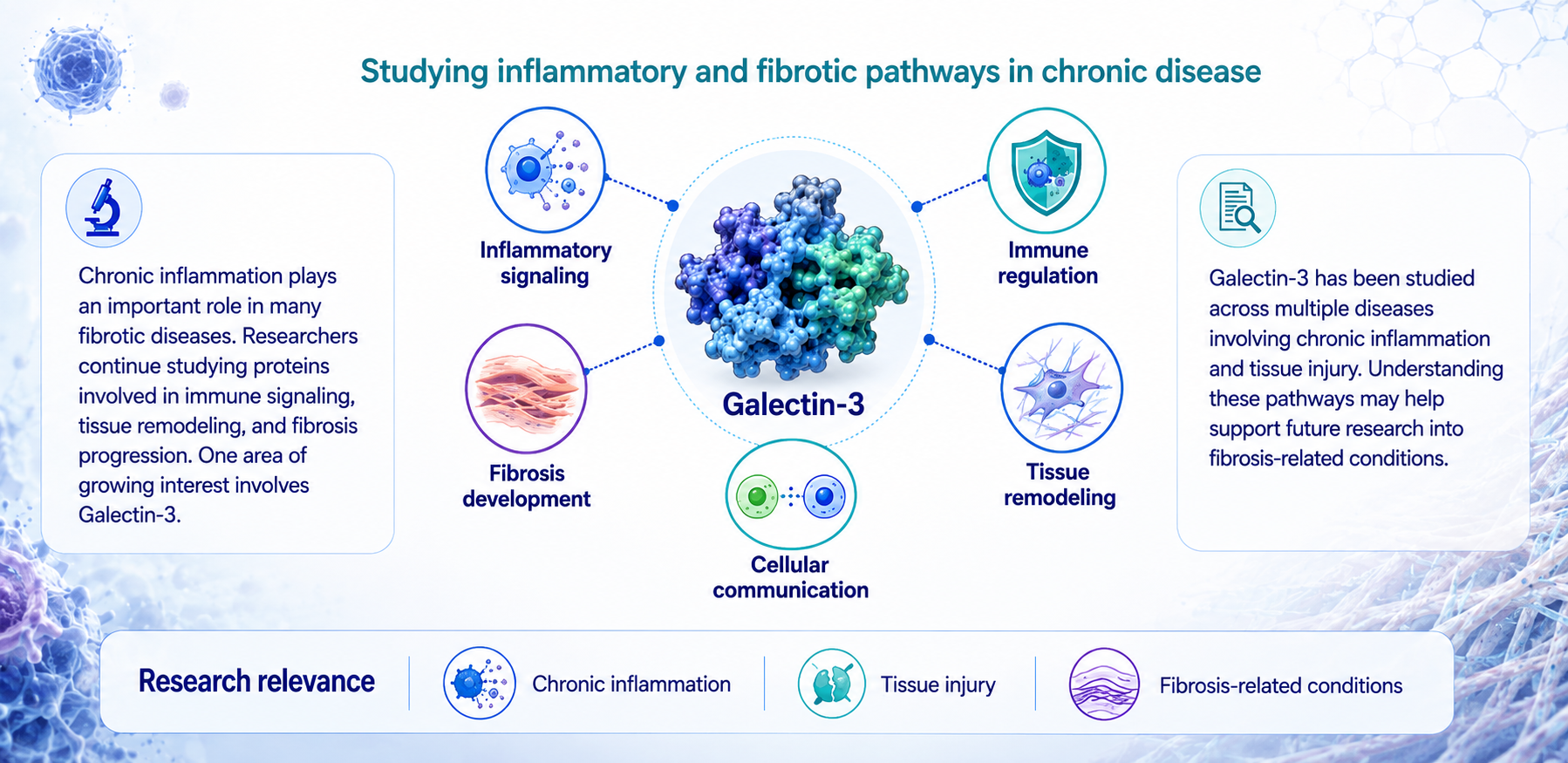
Chronic inflammation plays an important role in many fibrotic diseases.
Researchers continue studying proteins involved in immune signaling, tissue remodeling, and fibrosis progression.
One area of growing interest involves Galectin-3.
Galectin-3 has been associated with:
The protein has been studied across multiple diseases involving chronic inflammation and tissue injury.
Understanding these pathways may help support future research into fibrosis-related conditions.
Cystic fibrosis primarily affects organs that produce mucus and other secretions.
Commonly affected organs include:
As mucus accumulates within these tissues, inflammation and functional impairment may gradually develop.
One of the most important facts about cystic fibrosis is that the disease affects multiple organ systems rather than only the lungs.
The effects vary from person to person, but the disease often involves chronic mucus accumulation, inflammation, and recurrent infections.
Over time, these changes may contribute to:
The severity of symptoms can differ significantly depending on genetics and disease progression.
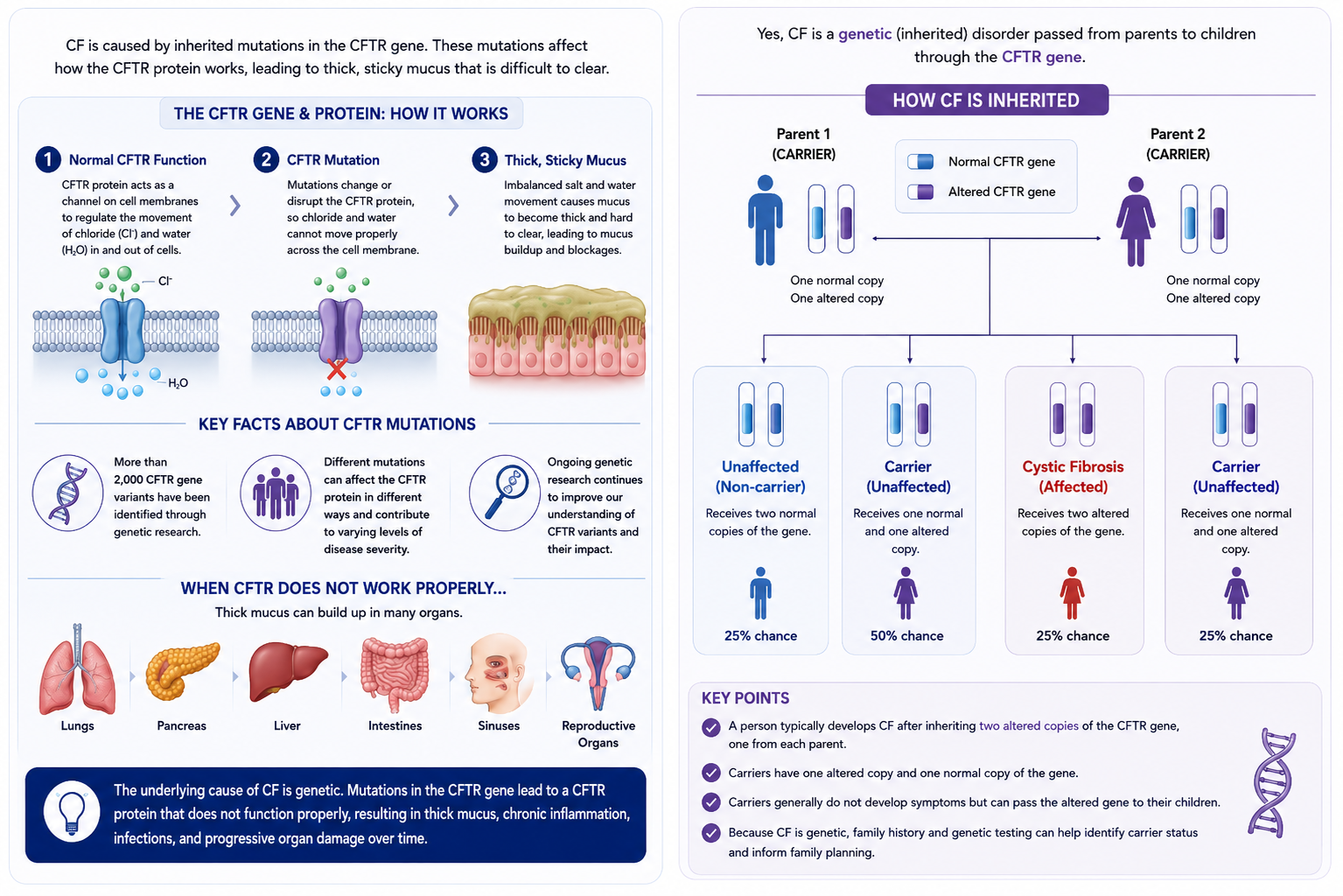
The primary cystic fibrosis causes are inherited mutations affecting the CFTR gene. The CFTR protein plays an important role in regulating chloride and water movement across cell membranes. When the protein does not function properly, mucus becomes thicker and harder to clear.
More than 2,000 CFTR gene variants have been identified through genetic research.
Different mutations may contribute to varying levels of disease severity.
Yes, CF can be genetic, an inherited disorder passed from parents to children through the CFTR gene.
A person typically develops the disease after inheriting two altered copies of the gene, one from each parent.
Individuals carrying a single altered copy are generally considered carriers and may not develop symptoms.
Many chronic diseases share common biological mechanisms involving inflammation, fibrosis, and tissue damage.
Future research areas continue to include:
Bioxytran, Inc. continues to explore biological pathways associated with inflammation and fibrosis as part of its broader research initiatives involving chronic disease and tissue injury.


