
Company Report – PDF DOWNLOAD
BioXyTran, Inc. is the kind of micro-cap biotechnology story that can look either very early or very interesting depending on what an investor chooses to emphasize. If the lens is current scale, the company remains small, undercapitalized, and dependent on additional funding. If the lens is optionality, the picture is more constructive. BioXyTran has assembled a multi-platform business around carbohydrate science, galectin antagonism, and oxygen-transport therapeutics, with active programs in antiviral therapy, stroke and hypoxia, and an emerging commercial bridge through A-SUQAR
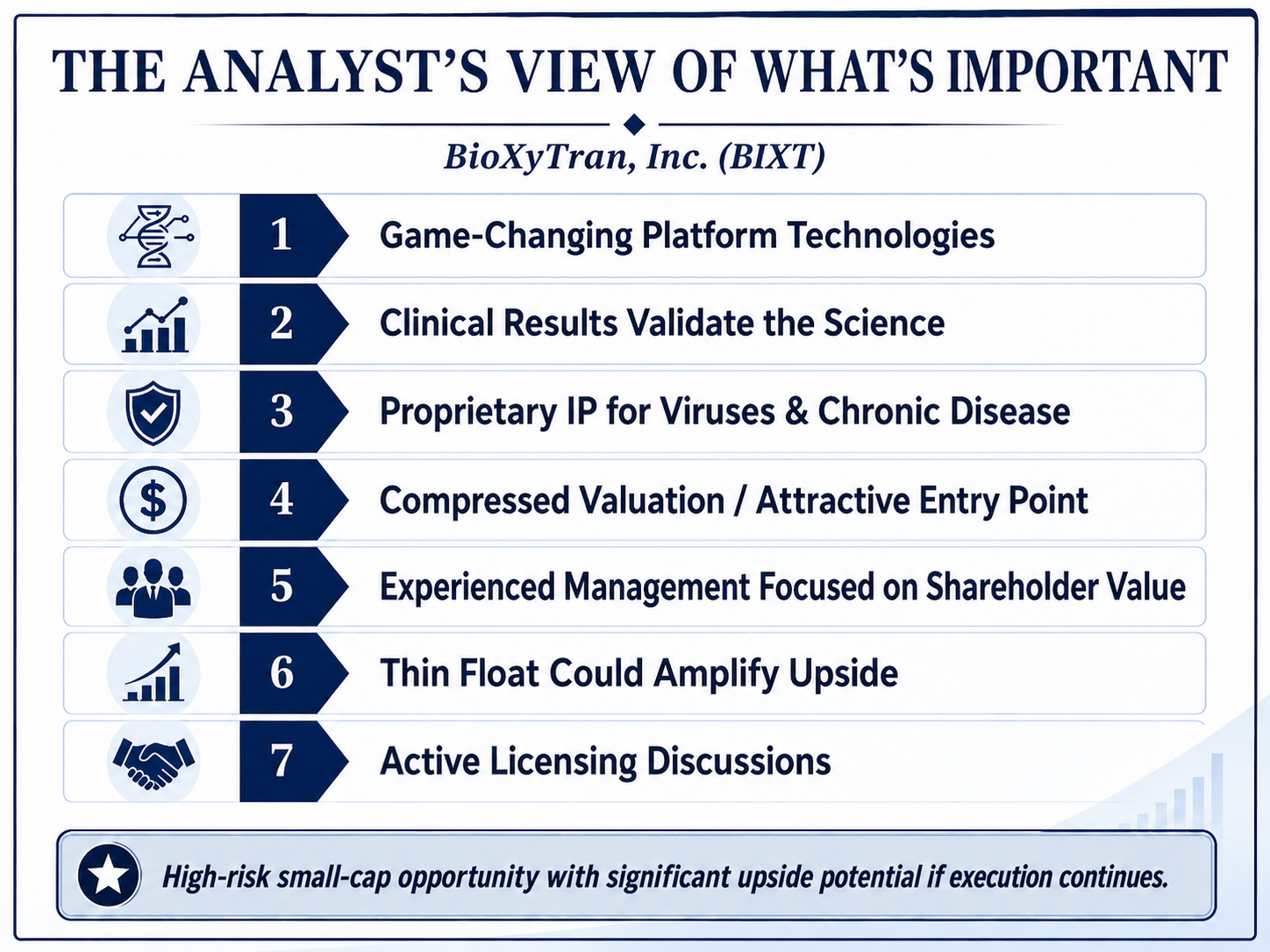
Recent developments have made the investment story more tangible. The company has reported positive Phase 2 data for ProLectin-M, outlined a path toward a 408-patient registrational study, entered a commercial distribution agreement for A-SUQAR, completed a financing, and continued to strengthen the scientific rationale behind BXT-25 through work involving tissue oxygenation monitoring. For a company with a market value measured in only a few million dollars, that is a meaningful amount of operating activity.
The positive case is straightforward. ProLectin-M has advanced beyond concept and into human clinical data. Management is attempting to convert that dataset into a registrational program rather than allowing the asset to remain in an exploratory stage. BXT-25 is earlier, but it is aimed at a large and clinically important problem: the speed and oxygen-delivery constraints of acute ischemic stroke care. A-SUQAR adds a potential near-term commercial pathway and makes the company less dependent on a single binary pharmaceutical event.
The risks are equally clear. BioXyTran remains a speculative biotechnology investment. It has limited cash resources, negative working capital, a going-concern warning, and a continuing need for outside capital. The company must demonstrate that it can convert scientific momentum into regulatory progress, meaningful commercial receipts, partnership funding, or additional capital on acceptable terms. Investors should expect the possibility of dilution and delays.
Our view is constructive but disciplined. This is not a conservative investment and should not be presented as one. It is a high-risk small-cap biotechnology company with multiple opportunities, a wide range of potential outcomes, and several credible catalysts. If BioXyTran can fund and execute its business plan, move ProLectin-M through the next regulatory steps, establish real commercial traction for A-SUQAR, and continue advancing BXT-25, the upside from current valuation levels could be substantial. If funding remains constrained or execution slips, delays and dilution are likely. That is the central investment tradeoff.
BioXyTran is a clinical-stage biotechnology company headquartered in Needham, Massachusetts and traded on the OTCQB under the ticker BIXT. The company is developing platform technologies in glycovirology, hypoxia, and degenerative disease, with an emphasis on addressing diseases where current treatment options remain limited or incomplete. Its current strategy centers on two primary technology families: galectin-targeting therapeutics for viral and inflammatory diseases, and oxygen-transport molecules intended for stroke and other conditions involving tissue hypoxia. Management is seeking to advance these platforms while also pursuing nearer-term commercial opportunities that could strengthen the company’s operating position.
The investment thesis rests on three principal elements. First, ProLectin-M has generated clinical data that management believes support advancement toward a pivotal development program. The compound’s potential applicability across several viral and inflammatory conditions could provide BioXyTran with a broader opportunity than a traditional single-indication biotechnology asset. Second, BXT-25 targets a large and underserved market where time-to-treatment, oxygen delivery, and the prevention of permanent tissue damage remain major clinical limitations. Third, A-SUQAR may provide a modest but strategically useful commercial bridge while the company’s pharmaceutical pipeline matures. Together, these assets reduce dependence on a single program, although BioXyTran remains highly dependent on access to capital, regulatory progress, clinical execution, and management’s ability to establish commercial and strategic relationships.
Recent news has improved the quality and coherence of the BioXyTran story. In early 2026, the company highlighted progress across both its virology and oxygen-transport platforms. It subsequently reported positive Phase 2 ProLectin-M results, disclosed a commercial distribution agreement for A-SUQAR, completed a private placement, and described regulatory discussions concerning a proposed 408-patient registrational trial for ProLectin-M. The company also highlighted work involving H5N1, RSV, H1N1, Long COVID, and tissue oxygenation monitoring relevant to BXT-25. While each of these developments remains subject to further validation and execution, the collective news flow suggests that BioXyTran is moving from a largely research-driven story toward a more defined clinical, regulatory, and commercialization strategy.
Financially, BioXyTran remains an early-stage company. The latest annual and quarterly filings show limited cash, substantial liabilities, negative working capital, and an accumulated deficit. These figures should not be ignored. The company will likely require additional financing to fund clinical trials, regulatory activities, manufacturing, business development, and general corporate operations. However, the financial statements should also be interpreted in the context of a development-stage biotechnology company that is still financing its platforms rather than harvesting mature commercial products. The central question is not whether current financial performance is strong, because it is not, but whether the company can convert its intellectual property, clinical results, and strategic relationships into assets capable of attracting substantially greater capital and market recognition.
The small market capitalization is one reason the company may appeal to high-risk small-cap investors. BioXyTran does not necessarily need every program to succeed to create meaningful shareholder value. A credible registrational pathway for ProLectin-M, visible commercial traction for A-SUQAR, stronger clinical validation of BXT-25, or a strategic partnership involving either the galectin or oxygen-transport platforms could materially change how the market values the company. Conversely, delays, financing challenges, dilution, unfavorable regulatory feedback, or disappointing clinical results could place significant pressure on the shares.
Our conclusion is that BioXyTran deserves a constructive speculative outlook. Recent news flow has improved, the platform story is broader than that of many OTC biotechnology peers, and the company appears to have more scientific, clinical, and operating substance than the average early-stage public micro-cap. The market opportunities being pursued are substantial, particularly if management can establish that its technologies provide meaningful advantages over existing approaches.
However, capital and execution remain the primary gating factors. BioXyTran must translate encouraging developments into clearly defined regulatory milestones, funded clinical programs, commercial progress, and credible strategic relationships. The investment opportunity is therefore best suited to investors who understand the risks of small biotechnology companies, can tolerate substantial volatility, and recognize that positive outcomes may require considerable time. If management successfully executes its business plan, the company’s current valuation could leave room for meaningful upside, but that opportunity must be weighed against the substantial clinical, financing, regulatory, and liquidity risks inherent in the shares.
BioXyTran presents itself as a clinical-stage biotechnology company built around carbohydrate drug design. The company is developing therapies in glycovirology, hypoxia, and degenerative disease. Its public materials emphasize two principal platforms: galectin-targeting therapeutics for viral and inflammatory diseases, and oxygen therapeutics for stroke, wound healing, and other hypoxia-related conditions.
The corporate structure supports a platform-oriented strategy. Pharmalectin focuses on viral disease therapeutics. NDPD Pharma is associated with PHGG-derived carbohydrate molecules and specialized pharmaceutical manufacturing development. Pharmalectin BVI serves as a custodian of intellectual property, including patents, trademarks, and copyrights. Pharmalectin India supports local clinical research and commercialization rights in India.
This structure gives BioXyTran a broader operating footprint than investors might expect from a company of its market size. It is still a small enterprise, but it is not simply a one-asset shell. Management has attempted to build multiple development and commercialization pathways around a common scientific foundation in carbohydrate chemistry.
The antiviral platform centers on galectin antagonism. BioXyTran's carbohydrate molecules are designed to interact with viral structures and galectin-related biological pathways. The pipeline includes ProLectin-M as an oral treatment, ProLectin-I as an intravenous formulation, ProLectin-A for severe respiratory settings, and ProLectin-F for lung fibrosis. Management believes the platform may have relevance across multiple respiratory viruses because it is directed toward conserved carbohydrate and lectin interactions rather than one narrow viral target.
The oxygen platform centers on BXT-25 and BXT-252. BXT-25 is being developed as an injectable oxygen therapeutic intended to deliver oxygen into ischemic tissue, particularly in stroke. The company describes the molecule as dramatically smaller than a red blood cell, which could permit oxygen delivery into areas where conventional blood flow is restricted. BXT-252 applies the same general modality to chronic wounds caused by ischemia.
The potential strategic value of the oxygen platform extends beyond the initial indications. If the core technology proves safe and clinically effective, potential applications could include stroke, trauma, cardiovascular ischemia, wound care, organ preservation, and other conditions where insufficient oxygen contributes to tissue damage. These possibilities remain speculative, but they illustrate why the technology could become strategically valuable if development progresses.
BioXyTran also maintains an intellectual-property position around its technologies. The oxygen platform includes co-polymer intellectual property and rights related to monitoring tissue metabolism and oxygen delivery. The antiviral platform includes patent applications and acquired rights covering lectin-binding carbohydrates for viral infections. The strength and enforceability of the patent estate will ultimately depend on prosecution outcomes and competitive developments, but the company does possess more than general know-how.
Management is an important part of the investment thesis. Chief Executive Officer David Platt has a background in carbohydrate chemistry and prior public-company leadership. Chief Medical Officer Leslie Ajayi brings clinical development experience. Chief Financial Officer Ola Soderquist has extensive management experience in international industrial and technology companies. The board and advisory group also include clinicians and life-sciences professionals.
The company is attempting to avoid a single-bet identity. ProLectin-M is the clearest near-term clinical program. A-SUQAR is the nearest commercial opportunity. BXT-25 is the longer-duration platform asset that could carry greater strategic value if it advances. This mix creates useful optionality, but it also increases the burden on management. For a company with limited capital, managing several programs at once can either create multiple paths to value or spread resources too thinly. Execution and funding will determine which interpretation proves correct.
For BioXyTran, recent news is not background material. It is central to the investment case. The 2026 sequence of announcements has reframed the company from a lightly followed micro-cap biotechnology issuer into a company with visible clinical, regulatory, financing, and commercialization activity.
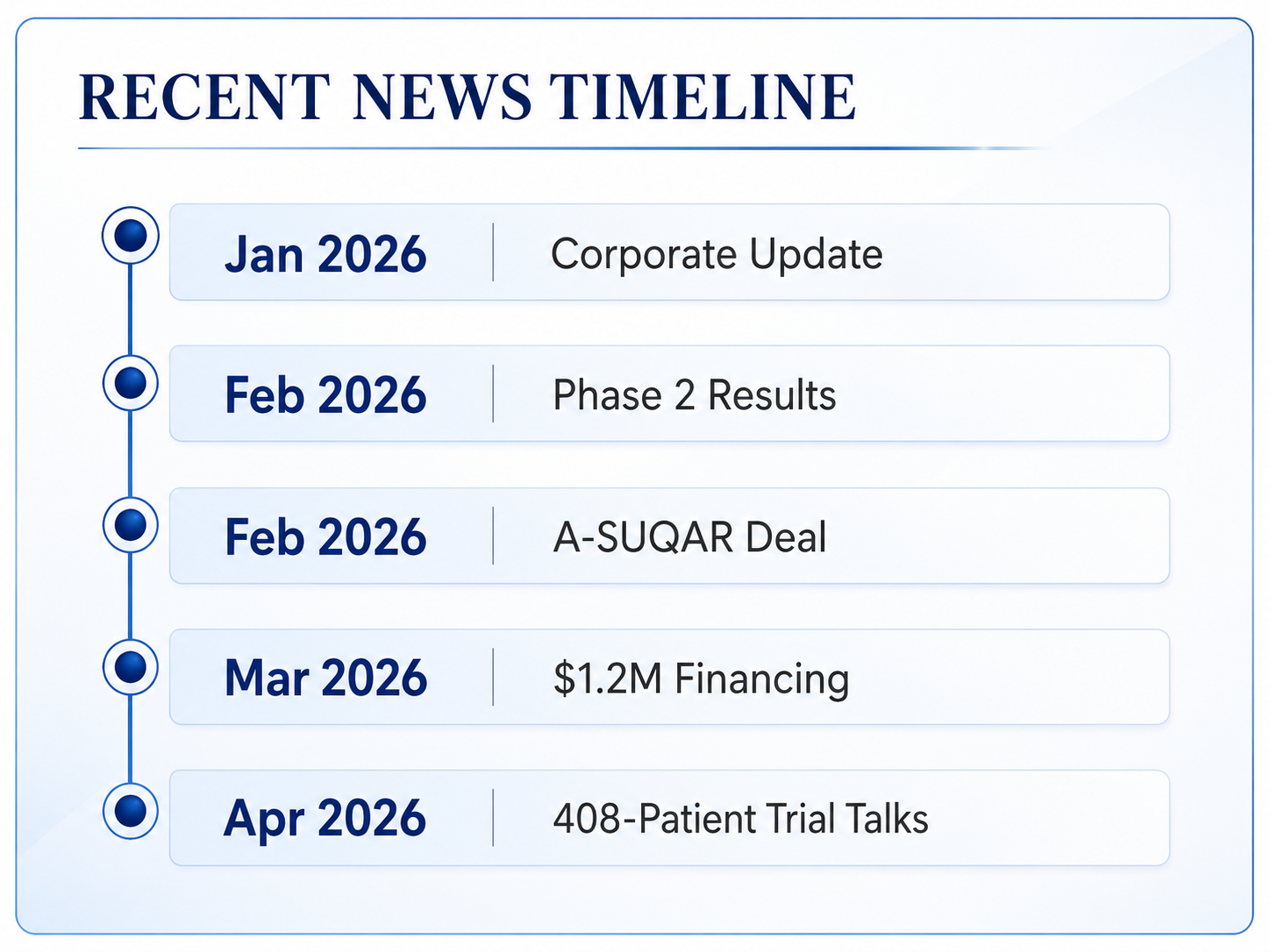
The January 2026 corporate update highlighted progress across the company's virology and oxygen-transport efforts. Management reiterated the status of ProLectin-M, prior clinical work, the oxygen-carrier concept, and continued scientific activity involving galectin biology. Although parts of the update summarized previous milestones, it established a more deliberate communication cadence and presented the pipeline as a unified platform strategy rather than a series of disconnected projects.
The most important clinical catalyst came in February 2026, when BioXyTran reported results from a randomized, double-blind, placebo-controlled, dose-optimization Phase 2 trial of ProLectin-M. The study enrolled 38 subjects. The company reported complete elimination of viral load in treated subjects by Day 7 compared with placebo, with no viral rebound in the treated population during the observation period.
For a company of BioXyTran's size, human clinical data are far more important than promotional language. The results provided management with a basis for selecting a dose and discussing a larger registrational study. The dataset will need to be confirmed in a substantially larger trial, but the Phase 2 results moved ProLectin-M beyond a conceptual or purely preclinical stage.
In April 2026, BioXyTran said its dose-optimization work confirmed a target regimen and that the company had entered regulatory discussions with the United States Food and Drug Administration and India's Central Drugs Standard Control Organization concerning a planned 408-patient registrational trial.
The proposed study was described as a randomized, placebo-controlled outpatient trial involving standard-risk patients with mild-to-moderate COVID-19, with broader potential relevance to influenza and RSV. Once a company begins specifying patient count, dose, trial design, and regulatory agencies, the development narrative becomes more concrete. The next step is to demonstrate that funding, protocol agreement, clinical sites, and execution capabilities are in place.
Management has positioned ProLectin-M as mechanistically different from conventional replication inhibitors. The company argues that an extracellular or viral-entry-oriented approach may reduce the potential for rebound, avoid some drug interaction issues, and preserve activity across viral variants because it focuses on more conserved biological structures.
This is an important strategic argument. BioXyTran is not attempting to compete as another conventional protease inhibitor. It is presenting ProLectin-M as a differentiated carbohydrate-based antiviral. That differentiation could become valuable if a larger trial confirms the earlier data. Until that occurs, investors should regard the mechanism as promising but not yet commercially validated.
BioXyTran has also broadened the antiviral story beyond COVID-19. The company reported a research collaboration with the University of Georgia to evaluate PHM23 against H5N1 avian influenza strains. It also described in vitro work involving RSV and H1N1, and continued development of ProLectin-I for investigation in Long COVID.
This expansion matters because it reframes the platform as a broader respiratory-virus strategy rather than a residual pandemic asset. The global burden of influenza, RSV, emerging influenza strains, and post-viral syndromes supports continued demand for differentiated antiviral mechanisms. These programs remain early, but they improve the strategic breadth of the galectin platform.
In February 2026, BioXyTran entered a commercial distribution agreement for A-SUQAR, a chewable dietary supplement based on the company's PHGG formulation and positioned to support healthy post-meal blood sugar levels. The arrangement allows BioXyTran to retain its intellectual property while relying on a commercial partner for registration, marketing, and distribution in permitted markets.
A-SUQAR is unlikely to be the company's largest long-term value driver. Its significance is strategic. It may provide a route to near-term commercial activity, validate the company's ability to monetize its carbohydrate platform, and create a modest revenue stream before pharmaceutical products reach the market. Even limited recurring sales would help distinguish BioXyTran from many pre-revenue biotechnology companies.
BioXyTran completed a private placement that generated approximately $1.2 million in gross proceeds. The transaction involved common shares and warrants, and management stated that proceeds would support working capital, development programs, and selected commercialization initiatives.
The financing was important because it provided additional operating time and demonstrated that the company could attract capital. It did not solve the broader funding requirement. The structure also created dilution and warrant overhang, which investors must incorporate into any valuation analysis. Nevertheless, access to capital is essential for a company at this stage, and the transaction was a necessary operating step.
The company also amended provisions involving preferred stock conversion and disclosed a performance-based award to the chief executive officer tied to commercial execution and financing initiatives. Supporters can view the structure as an effort to align management incentives with commercialization and capital formation. Skeptics may view it as evidence of the continuing importance of equity issuance to the company's operating model.
Both interpretations have merit. The more important issue is whether management creates value per share faster than the company issues additional shares. That is a central question for nearly every development-stage micro-cap biotechnology investment.
The BXT-25 program has also received useful support. BioXyTran previously announced access to a GMP-quality source of camel hemoglobin through work connected to the Heme Foundation and a universal oxygen-carrier initiative. More recently, the company highlighted scientific work involving real-time tissue oxygenation monitoring and its rights to use monitoring technology relevant to evaluating oxygen utilization and tissue metabolism.
These are not late-stage development milestones, but they address two practical challenges in oxygen therapeutics: reliable raw-material supply and the ability to measure effects at the tissue level. Strengthening these areas may improve the program's credibility with regulators, potential partners, and scientific collaborators.
Taken together, the recent news shows that BioXyTran is trying to build a coherent development company around a clinical antiviral asset, a near-term commercial product, and a longer-duration oxygen platform. That structure can create disproportionate upside if management executes. It can also place significant strain on a small balance sheet. Investors should therefore focus not only on the number of announcements, but on whether each announcement advances the company toward funded clinical trials, revenue, or strategic validation.
ProLectin-M is the center of gravity for the BioXyTran investment story. The company has completed clinical work in India, maintains a United States investigational framework, and has discussed advancing into a larger registrational program. The Phase 2 dose-optimization data provide a foundation for the next stage, although additional funding and regulatory alignment will be required.
The scientific rationale is based on galectin and carbohydrate interactions. ProLectin-M is intended to bind to galectin-related structures and glycosylated viral components, interfering with viral attachment or entry. Peer-reviewed studies have reported viral-load reductions and increased viral clearance in patients treated with the compound. These studies do not replace a registrational trial, but they provide a degree of scientific support that is uncommon among many OTC biotechnology companies.
The commercial opportunity for ProLectin-M depends on more than statistical success. The product would need to show a clinically meaningful benefit, a practical treatment regimen, an acceptable safety profile, manufacturability, and a clear place in treatment protocols. Management must also show how the product would compete with or complement established antiviral therapies.
If the planned registrational program is funded and successfully completed, ProLectin-M could become the company's most important valuation driver. It could also make the broader galectin platform more attractive to strategic partners seeking differentiated antiviral mechanisms.
The broader ProLectin family expands the platform into intravenous treatment, severe respiratory disease, and fibrosis-related indications. ProLectin-I is intended for intravenous administration and is being considered for serious viral disease and Long COVID. ProLectin-A and ProLectin-F address severe respiratory and fibrotic settings.
These programs add optionality, but they should not be valued as if they are equally advanced. Investors should view them as extensions of the scientific platform whose future value will depend heavily on the success of ProLectin-M. A validated lead product would make the additional formulations more credible. A failure of the lead program would reduce confidence across the family.
Glycovirology examines the role of carbohydrate-binding interactions in viral entry, spread, and immune response. BioXyTran's strategy is to use carbohydrate-based molecules to disrupt these processes. The theoretical advantage is that conserved carbohydrate and lectin interactions may be less vulnerable to mutation than highly specific protein targets.
This approach could have relevance across COVID-19, influenza, RSV, H5N1, and other viruses. The platform's value will depend on demonstrating reproducible activity across several pathogens and translating laboratory findings into clinically meaningful outcomes. The early data support continued work, but broad platform claims require broad validation.
BXT-25 is the company's principal oxygen-transport asset. It is described as an acellular oxygen carrier based on camel hemoglobin stabilized with a co-polymer. The molecule is intended to be far smaller than a red blood cell, potentially allowing it to carry oxygen into ischemic tissue where blood flow is limited.
The initial target is acute ischemic stroke. The clinical logic is compelling. Brain tissue begins to suffer damage when blood flow and oxygen are interrupted, and current treatments are constrained by time, eligibility, imaging, and access to specialized centers. A therapy that could deliver oxygen to threatened tissue while clinicians restore blood flow could address a major unmet need.
The program remains technically ambitious. Oxygen-carrier development has historically been difficult. Safety, dosing, vascular effects, manufacturing consistency, immunogenicity, and clinical measurement are all important. BioXyTran's focus on molecular size, blood-type compatibility, room-temperature stability, and tissue monitoring is intended to address some of these concerns.
BXT-252 applies the oxygen-delivery concept to chronic wounds associated with ischemia. If the core platform works, additional applications could include trauma, cardiovascular ischemia, organ preservation, and other hypoxic conditions.
These opportunities should be treated as long-term optionality rather than near-term valuation drivers. Still, the breadth of potential use is important. A successful oxygen-delivery platform could support multiple product candidates and partnership opportunities.
BioXyTran's rights involving tissue oxygenation and metabolic monitoring may become strategically important. Oxygen therapeutics require credible measurement of whether oxygen reaches and is used by target tissue. Monitoring mitochondrial redox state, tissue oxygen concentration, cerebral blood flow, extracellular potassium, and related signals may help guide study design and provide more direct evidence of biological activity.
This monitoring layer could improve the quality of future preclinical and clinical work. It may also make the BXT-25 program more attractive to potential partners because it provides a way to quantify physiological effects rather than relying only on indirect clinical outcomes.
The company has described manufacturing steps involving hemoglobin separation, purification, polymerization, size selection, and synthesis with a proprietary co-polymer. Access to GMP-quality camel hemoglobin is therefore a practical requirement, not a minor detail.
Securing a credible raw-material source reduces one development risk, although scale-up and manufacturing validation remain. Investors should watch for additional information concerning manufacturing partners, batch consistency, preclinical material, toxicology production, and regulatory-grade supply.
A-SUQAR represents the nearest potential commercial pathway. The product is a dietary supplement using BioXyTran's PHGG formulation and is positioned to support healthy post-meal blood sugar levels. The distribution agreement gives an external partner responsibility for registration, marketing, and distribution while BioXyTran retains ownership of its intellectual property.
The central question is not whether A-SUQAR can justify the entire company's valuation. The question is whether it can generate real shipments, repeat orders, commercial data, and cash receipts. Positive commercial traction would demonstrate that BioXyTran can translate its carbohydrate expertise into a marketable product while the pharmaceutical pipeline develops.
BioXyTran has also discussed galectin-related research in oncology and immune response. These efforts are early and should not be included as a major near-term valuation component. They do, however, reinforce the potential breadth of galectin biology.
A successful lead antiviral asset could eventually position BioXyTran as a platform licensor or collaborative development company. That type of business model may be more realistic than attempting to independently fund and commercialize every potential indication.
The global burden of stroke is large and persistent. Stroke remains a leading cause of death and long-term disability. Ischemic stroke occurs when a clot blocks blood flow to the brain, depriving tissue of oxygen and nutrients. Current treatment is highly time-sensitive, and many patients do not receive optimal intervention within the available window.
This environment supports the strategic rationale for BXT-25. A therapy that could preserve threatened tissue by improving oxygen delivery might complement thrombolysis, thrombectomy, and supportive care. The value proposition is especially attractive because it addresses the underlying problem of oxygen deprivation rather than focusing only on clot removal.
The challenge is that oxygen therapeutics have a difficult development history. BioXyTran must prove safety, effective tissue delivery, practical administration, and clinically meaningful benefit. Investors should therefore assign meaningful optionality to BXT-25 without assuming near-term success.
The antiviral opportunity extends well beyond COVID-19. Seasonal influenza produces millions of illnesses and hundreds of thousands of hospitalizations in the United States during severe seasons. RSV creates substantial risk for older adults, infants, and other vulnerable populations. Emerging influenza strains such as H5N1 remain a global concern. Long COVID and other post-viral syndromes continue to create medical and economic burdens.
This market environment supports the strategic logic of a broad antiviral platform. A differentiated mechanism that shows activity across several viruses could be valuable even if BioXyTran does not dominate any single indication. The company must nevertheless demonstrate clear clinical utility and a realistic commercialization strategy.
COVID-19 has moved from an acute pandemic emergency into an ongoing respiratory disease environment. Infection waves continue, and a meaningful population experiences serious illness or prolonged symptoms. This keeps the market relevant for differentiated antivirals, particularly products that can be used safely, early, and broadly.
The commercial bar is higher than it was during the pandemic. Any new therapy must compete with established treatment patterns, vaccines, supportive care, and existing antivirals. ProLectin-M will need to offer a compelling combination of efficacy, safety, convenience, and differentiation.
Established pharmaceutical companies possess large sales forces, regulatory expertise, manufacturing infrastructure, and payer relationships. BioXyTran cannot compete on scale. It must compete through differentiation and data.
Management's argument is that galectin antagonism may provide a broad mechanism, reduce rebound potential, and avoid some drug interaction issues associated with conventional antivirals. This is a legitimate scientific proposition, but the burden of proof remains high. A larger randomized trial will be critical.
The competitive challenge in oxygen therapeutics is different. The primary issue is not simply market share against an approved branded product. The issue is proving that an oxygen carrier can be safe, stable, measurable, and clinically useful.
BioXyTran's potential advantages include small molecular size, broad blood-type compatibility, room-temperature stability, raw-material access, and tissue-monitoring capabilities. These features may improve the program's attractiveness, but they must be validated through rigorous development.
Large pharmaceutical and biotechnology companies frequently prefer assets that have passed early proof-of-concept risk. This creates an opportunity for smaller companies to build value by producing data, securing intellectual property, and creating a credible regulatory path before seeking partnership.
For BioXyTran, becoming partnerable may be more important than becoming a fully integrated commercial company. A partnership involving ProLectin-M, BXT-25, or the broader galectin platform could validate the science, provide non-dilutive funding, and reduce the burden on the balance sheet.
BioXyTran's small market capitalization creates both opportunity and risk. Meaningful validation in one program could have an outsized effect on valuation. The same leverage works in reverse. Financing pressure, clinical ambiguity, or development delays can produce severe stock-price declines.
This asymmetry is precisely why some small-cap investors may find BIXT interesting. The addressable markets are large and the current valuation is small. However, the investment vehicle is fragile and should be sized accordingly within a diversified portfolio.
BioXyTran's financial statements should be viewed in the correct frame. This is a development-stage biotechnology company, so trailing revenue and earnings are not the primary valuation measures. The key financial question is whether the company has enough capital to convert scientific activity into investable milestones.
At year-end 2025, BioXyTran reported limited cash, modest total assets, substantial liabilities, and an accumulated deficit of approximately $21 million. The company had not generated revenue from operations and disclosed substantial doubt about its ability to continue as a going concern.
The first-quarter 2026 filing showed that cash remained limited, liabilities had increased, working capital was negative, and the accumulated deficit had widened. The quarterly loss was affected by a significant executive bonus award, so the reported loss should not be treated as a clean measure of recurring research spending. Even with that qualification, the balance sheet offers little room for error.
Management has stated that the company requires several million dollars to support near-term operations and substantially more to advance the major development programs through later clinical stages. The March 2026 financing provided additional time, but it did not eliminate the capital requirement.
Future financings may involve common stock, preferred stock, warrants, convertible securities, strategic partnerships, licensing arrangements, or non-dilutive funding. Investors should assume that additional equity issuance is likely unless the company secures meaningful partnership funding or commercial revenue.
The reason to keep the financial discussion brief is that BioXyTran will not be won or lost on current earnings. It will be won or lost on the company's ability to fund and execute clinical, regulatory, and commercial milestones. The financial statements matter because they define how urgently those milestones must be achieved.
At a market capitalization of only a few million dollars, BioXyTran is valued more like a distressed concept than a clinical-stage company with multiple active programs. The market is heavily discounting financing risk, regulatory risk, clinical risk, execution risk, and dilution.
That discount is understandable. BioXyTran does not yet have operating revenue, a strong balance sheet, a funded registrational trial, or an approved pharmaceutical product. A conventional valuation model based on revenue or earnings would not be useful at this stage.
A more appropriate framework is a probability-adjusted assessment of the company's platforms and catalysts. ProLectin-M has the highest near-term probability of creating value because it has human clinical data and a stated registrational path. A-SUQAR may create smaller but nearer-term commercial validation. BXT-25 has a lower near-term probability but potentially greater long-term strategic value.
The small market capitalization means that BioXyTran does not need every program to succeed. A funded pivotal trial, a credible strategic partnership, recurring A-SUQAR revenue, or significant BXT-25 progress could justify a materially higher valuation. Conversely, failure to obtain capital or execute the next steps could result in substantial dilution and further deterioration in the share price.
For these reasons, BIXT should be viewed as an asymmetric but speculative opportunity. The potential percentage upside may be high because the starting valuation is low. The probability of adverse outcomes is also high. Investors should focus on risk-adjusted position sizing rather than headline upside alone.
The most important near-term catalyst is a clearer regulatory update concerning the planned 408-patient registrational study. Investors should look for protocol agreement, trial registration, financing, clinical-site selection, patient-enrollment timing, and confirmation of endpoints.
A pivotal program will require substantially more capital than the company currently holds. A financing, partnership, grant, or strategic arrangement dedicated to the trial would significantly improve the investment case.
The market will want evidence that the distribution agreement has produced shipments, repeat orders, market registrations, or cash receipts. Even modest sales would provide useful validation.
A partnership involving ProLectin-M, BXT-25, or the galectin platform could provide scientific validation, development expertise, and non-dilutive funding. For a company of BioXyTran's size, a good partnership could be transformational.
Investors should monitor progress involving manufacturing, preclinical studies, toxicology, regulatory planning, tissue-monitoring validation, and preparation of clinical-grade material. Each of these steps would make the oxygen platform more credible.
Results involving H5N1, RSV, H1N1, or Long COVID could broaden the perceived value of the galectin platform. These studies should be evaluated according to their stage and quality. In vitro findings are useful, but human clinical data carry far greater value.
New financings, warrant exercises, preferred-stock changes, and executive equity awards may materially affect common shareholders. Investors should track both the amount of capital raised and the effective dilution.
For this analyst, evaluating an emerging biotechnology company begins with the management team and then moves to the market opportunity. Promising science and large addressable markets are important, but shareholder value is ultimately created by the people responsible for raising capital, designing clinical programs, working with regulators, protecting intellectual property, establishing partnerships, and allocating limited resources. This is particularly true for a small biotechnology company, where execution can be as important as the underlying technology.
Management execution will determine whether BioXyTran's scientific opportunities become shareholder value. The company must coordinate clinical development, regulatory strategy, financing, intellectual property, manufacturing, investor communication, and commercial partnerships with a very limited resource base.
The management team offers relevant scientific, clinical, and financial experience. David Platt's background in carbohydrate chemistry is directly aligned with the company's scientific foundation. Leslie Ajayi adds clinical-development knowledge, and Ola Soderquist contributes financial and operational experience.
The strength of management should be evaluated through milestones rather than biographies. Investors should watch whether the company begins the planned registrational study, produces evidence of A-SUQAR sales, secures funding on reasonable terms, advances BXT-25 toward regulatory-grade development, and communicates setbacks transparently.
BioXyTran is led by a management team with experience spanning biotechnology company formation, public-market financing, carbohydrate chemistry, clinical development, corporate finance, and international business operations. These capabilities are directly relevant to the company’s current stage of development. Advancing ProLectin-M, BXT-25, and the broader technology portfolio will require scientific credibility, disciplined clinical planning, access to capital, regulatory coordination, and the ability to manage several programs with limited resources.
The backgrounds of the company’s senior executives indicate a leadership team familiar with many of the technical, financial, and organizational demands involved in building an emerging biotechnology company. Management execution remains one of the most important elements of the BioXyTran investment thesis. However, the team appears to bring a useful combination of scientific knowledge, clinical experience, public-company leadership, and financial discipline that should support the company as it seeks to advance its clinical programs, strengthen its financial position, and pursue commercial and strategic opportunities.
Dr. David Platt is an experienced biotechnology entrepreneur and a recognized specialist in carbohydrate chemistry. He has founded three publicly traded companies and has spent much of his career developing businesses and therapeutic technologies based on complex carbohydrate science. According to the company, the enterprises he founded created nearly $1 billion in investor value, and he has directly raised approximately $150 million through the U.S. public markets.
Dr. Platt has also led the development of two drug candidates from initial concept through Phase 2 clinical trials. This combination of scientific knowledge, company-building experience, and familiarity with public financing is particularly relevant to BioXyTran’s current objectives. The company’s galectin-targeting platform is closely connected to carbohydrate chemistry, making Dr. Platt’s technical background important to the scientific direction of the business as well as its intellectual-property strategy.
Before BioXyTran, Dr. Platt founded Boston Therapeutics, Inc. in 2010. From 2001 through 2009, he was a founder of Pro-Pharmaceuticals, Inc., where he served as chief executive officer and chairman of the board. That company later became Galectin Therapeutics, Inc. In 1995, he founded International Gene Group and remained involved with the company through 2000.
Dr. Platt’s principal responsibilities at BioXyTran include setting corporate strategy, directing scientific development, communicating the company’s investment thesis, pursuing financing, and identifying strategic relationships. His history of forming public biotechnology companies and advancing drug candidates through mid-stage clinical development provides relevant experience as BioXyTran seeks to move ProLectin-M toward a larger registrational program and create additional value from BXT-25 and its broader technology portfolio.
Ola Soderquist brings more than 30 years of senior financial, operational, and entrepreneurial management experience across international technology and industrial companies. His background includes service in chief financial officer and other senior management roles involving public companies, private companies, venture-backed businesses, private-equity-owned enterprises, and early-stage organizations.
Mr. Soderquist has worked with a range of multinational companies, including Industrivarden, Electrolux, Ericsson, Swedish Match, SKF, Belden, and Traction. This experience has exposed him to complex corporate structures, public-company reporting requirements, operational integration, financial controls, and international business management. He is multilingual and has worked across functions and geographic markets, which may be useful as BioXyTran evaluates global clinical, regulatory, distribution, and partnership opportunities.
His management experience includes business integration, systems implementation, financial process improvement, operational controls, and organizational development. These capabilities are important for a company such as BioXyTran, which must carefully allocate capital among clinical trials, regulatory activities, manufacturing, commercial development, and general corporate operations.
Mr. Soderquist earned both a Bachelor of Science and a Master of Science in Accounting from the Stockholm School of Economics. He also earned an MBA from Babson College’s Franklin W. Olin Graduate School of Business. His accounting, transaction, and operating experience should assist BioXyTran in managing public-company obligations, evaluating financing alternatives, improving internal processes, and supporting discussions with investors and prospective strategic partners.
Dr. Leslie Ajayi is a physician and clinical pharmacologist with more than 20 years of experience in clinical development across academic and industry settings. His training includes internal medicine, cardiovascular medicine, and clinical pharmacology, providing a broad medical foundation that is relevant to BioXyTran’s work in infectious disease, stroke, hypoxia, inflammation, and vascular-related conditions.
Dr. Ajayi received his undergraduate training in health sciences and his medical degree equivalent from Obafemi Awolowo University in Nigeria, graduating magna cum laude. He later earned a PhD in clinical pharmacology from the University of Glasgow. During his academic career in the United Kingdom, he worked with major pharmaceutical companies as an investigator on Phase 1 first-in-human studies, proof-of-concept trials, pharmacokinetic and pharmacodynamic studies, combined PK-PD evaluations, and studies involving specialized patient populations.
His clinical research experience includes a wide range of randomized controlled trial designs, including double-blind, placebo-controlled, double-dummy, single-blind, crossover, parallel-group, and Latin-square studies. He has also worked with clinical research organizations and pharmaceutical clinical-monitoring teams, providing practical exposure to trial execution, data quality, protocol design, and regulatory expectations.
Dr. Ajayi participated in clinical programs involving cardiovascular therapies such as perindopril, cilazapril, and amlodipine. His research also included evaluation of angiotensin-converting enzyme inhibitors in patients with Type 2 diabetes, insulin resistance, and hypertension. This cardiovascular and pharmacology background may be particularly relevant to BXT-25 and the company’s broader focus on oxygen delivery, tissue hypoxia, and stroke.
As Chief Medical Officer and head of the Medical Advisory Board, Dr. Ajayi is positioned to help guide clinical strategy, trial design, protocol development, medical interpretation of study results, and engagement with investigators and regulatory professionals. His experience should be valuable as BioXyTran seeks to translate encouraging early clinical findings into larger, more rigorous studies that can support regulatory review and potential commercialization.
Our evaluation of BioXyTran begins with the management team because the company’s opportunity can only be realized through effective execution. The science may be promising and the target markets may be large, but success will depend on management’s ability to select the right programs, secure financing, establish realistic timelines, navigate regulatory requirements, and build relationships with clinical, manufacturing, and commercial partners.
BioXyTran’s leadership combines scientific entrepreneurship, public-company finance, and hands-on clinical development experience. Dr. Platt provides scientific direction and biotechnology company-building experience, Mr. Soderquist contributes financial and operational discipline, and Dr. Ajayi brings clinical and medical-development expertise. This combination is well aligned with the company’s immediate requirements, particularly the need to raise capital, advance clinical programs, manage regulatory interactions, and communicate a clear development strategy to investors and potential partners.
The team’s experience does not eliminate the substantial risks associated with BioXyTran’s development programs. The company must still secure adequate funding, prioritize its most valuable opportunities, meet clinical and regulatory milestones, and avoid overextending its resources. Nevertheless, management appears to possess many of the core capabilities required to execute the business plan. The opportunity is significant, but the ultimate outcome will depend on whether the team can convert scientific promise and clinical progress into funded programs, strategic relationships, regulatory advancement, and measurable shareholder value.
BioXyTran will require additional capital to maintain operations and advance its clinical, regulatory, manufacturing, and commercialization programs. This is common for development-stage biotechnology companies, particularly those pursuing multiple technology platforms. The company’s ability to raise capital may improve as it reaches clinical milestones, secures partnerships, or develops commercial revenue. However, future financings could still occur through common shares, preferred shares, warrants, convertible securities, or other instruments that increase the fully diluted share count. Investors should evaluate potential upside using a fully diluted capitalization whenever sufficient information is available.
The company’s long-term value will depend heavily on whether encouraging early and mid-stage results can be reproduced in larger, well-controlled clinical studies. ProLectin-M, BXT-25, and the company’s broader galectin and oxygen-transport technologies address significant medical needs, but scientific promise does not guarantee regulatory approval or commercial success. Larger trials may fail to meet their primary endpoints, identify safety concerns, or produce benefits that regulators, physicians, or commercial partners consider insufficiently meaningful.
Regulatory agencies may also require additional studies, revised endpoints, manufacturing validation, longer follow-up periods, or changes to proposed clinical protocols. These requirements could increase costs and extend development timelines. At the same time, successful regulatory discussions and clearly defined development pathways could materially reduce uncertainty and improve the company’s ability to attract capital or strategic interest. The principal issue is therefore not the absence of opportunity, but whether management can convert the underlying science into repeatable clinical results and an achievable regulatory strategy.
Even if one or more BioXyTran products receive regulatory authorization, commercial adoption is not assured. Products may encounter competition, reimbursement limitations, physician resistance, manufacturing constraints, pricing pressure, or difficulty demonstrating sufficient differentiation from existing treatments. A-SUQAR could provide useful early revenue and commercial experience, but it may not generate enough sales to materially fund the pharmaceutical pipeline.
BioXyTran’s commercial outlook could improve meaningfully if the company secures distribution partners, licensing agreements, co-development relationships, or other strategic alliances. Such arrangements could provide capital, technical resources, market access, and third-party validation. Investors should therefore monitor not only product sales, but also partnership activity and evidence that outside organizations are willing to commit resources to the company’s platforms.
The company depends on specialized raw materials, purification processes, polymerization methods, quality controls, and external manufacturing relationships. Delays, inconsistent production, supplier limitations, or difficulty scaling manufacturing could disrupt clinical development or future commercialization. These risks may become more manageable as processes are standardized and manufacturing partners gain experience with the company’s technologies, but reliable scale-up remains an important execution requirement.
BioXyTran’s competitive position also depends on patents, trade secrets, technical know-how, and its ability to operate without infringing third-party rights. Patent applications may not issue with the breadth expected, issued claims may be challenged, and competitors may develop alternative approaches. Strong intellectual property can create substantial strategic value, but patent protection alone does not establish clinical effectiveness, regulatory acceptance, or market demand.
BioXyTran is pursuing several programs with a relatively small organization and limited financial resources. This creates both opportunity and complexity. A broad pipeline provides multiple potential paths to value creation, but it also requires disciplined allocation of capital and management attention. The company must prioritize the programs with the strongest combination of clinical evidence, regulatory feasibility, market opportunity, and funding potential.
Execution risk would decline if management establishes clear program priorities, reaches stated milestones, strengthens the balance sheet, and adds experienced development or commercialization partners. Conversely, delays, shifting priorities, or insufficiently focused spending could weaken investor confidence. The company’s future will depend as much on management’s ability to sequence and finance its opportunities as on the quality of the underlying technologies.
BIXT is an OTC-traded micro-cap security. Trading volume may be limited, bid-ask spreads may be wide, and investors may experience difficulty purchasing or selling shares at expected prices. The stock may also respond sharply to company announcements, financing activity, regulatory developments, or changes in small-cap market sentiment.
The breadth of BioXyTran’s pipeline may be viewed positively as strategic optionality, but it can also make the investment story more difficult to understand. Clear communication, measurable milestones, and consistent prioritization will be important. Investors should recognize that the risks are substantial, as they are with most early-stage biotechnology investments, but successful execution across even a limited portion of the company’s portfolio could materially improve its operating position and valuation.
We like the opportunity here relative to this company, but of course there are risks. We view BioXyTran is a speculative small-cap biotechnology company with a scientific, clinical, and operating story that appears more substantial than its current market capitalization suggests. The company has generated human clinical data for ProLectin-M, outlined a potential path toward a larger registrational trial, introduced a possible commercial bridge through A-SUQAR, and continued to advance the differentiated oxygen-transport platform represented by BXT-25. Collectively, these assets provide BioXyTran with several potential avenues for value creation rather than dependence on a single development program.
The investment opportunity is meaningful because the company is pursuing large and medically important markets, including respiratory viruses, stroke, tissue hypoxia, and related inflammatory conditions. These are areas where improved therapies could attract substantial clinical, commercial, and strategic interest. BioXyTran’s current valuation appears to assign limited value to the company’s broader platform potential. As a result, successful clinical progress, regulatory clarity, commercial traction, or the completion of a meaningful partnership could produce a significant change in investor perception and valuation.
Recent developments have strengthened the investment narrative by giving investors more visible milestones to evaluate. The next phase of the story will depend on whether management can convert its recent announcements into funded clinical programs, regulatory advancement, commercial revenue, and strategic relationships. If management is able to execute the business plan, secure the capital required to advance its highest-priority programs, and demonstrate measurable progress, BIXT shares could appreciate sharply from current levels.
The risks remain high and should not be minimized. BioXyTran has limited cash, negative working capital, substantial liabilities, and a continuing need for outside financing. Clinical results may not be reproduced in larger studies, regulatory agencies may require additional work, development timelines may be extended, and future financings could materially dilute existing shareholders. The company also faces the execution challenges that are common among small biotechnology companies attempting to advance multiple programs with limited resources.
On balance, we view BIXT as an interesting and potentially undervalued speculative opportunity for investors who understand the unusually high risks associated with micro-cap biotechnology securities. It is not appropriate for investors seeking stability, strong liquidity, predictable earnings, or near-term financial visibility. However, for investors with a high tolerance for volatility and a longer investment horizon, the combination of human clinical data, platform breadth, recent news flow, large addressable markets, and a relatively low valuation creates a credible case for continued attention.
BioXyTran does not need every program to succeed for the investment thesis to improve materially. Meaningful advancement of ProLectin-M, successful development of BXT-25, commercial progress with A-SUQAR, or a credible strategic transaction could each serve as a significant catalyst. The company remains a high-risk investment, but it also offers the type of asymmetric upside that can attract experienced small-cap biotechnology investors when management demonstrates sustained execution.
The opportunity is meaningful because the company is pursuing large markets in respiratory viruses, stroke, and hypoxia. The current valuation leaves room for substantial appreciation if management secures capital and converts recent announcements into funded, measurable milestones.
The risks are equally meaningful. The company has limited cash, negative working capital, substantial liabilities, and a continuing need for financing. Clinical success is uncertain, regulatory requirements may change, and future financings may dilute existing shareholders.
On balance, we view BIXT as an interesting speculative opportunity for investors who understand micro-cap biotechnology risk. It is not appropriate for investors seeking stability, liquidity, or predictable earnings. For risk-tolerant investors, the combination of clinical data, platform breadth, recent news flow, and low valuation creates a credible case for continued attention.
BioXyTran has more than one credible path to create value. ProLectin-M offers the most immediate clinical opportunity, A-SUQAR may provide early commercial validation, and BXT-25 represents a potentially important longer-term platform in stroke and tissue hypoxia. The broader galectin program adds additional possibilities in respiratory viruses, post-viral disease, and other areas where carbohydrate-based mechanisms may have therapeutic relevance.
The company is also operating in a market environment that is generally supportive of differentiated biotechnology assets. Respiratory viruses remain a persistent global health burden. Stroke continues to create enormous medical and economic costs. Pharmaceutical companies and investors continue to seek novel mechanisms that can produce meaningful clinical advantages. BioXyTran's platforms are positioned in front of these large and durable needs.
None of this removes the risks. BioXyTran is a small company with limited financial resources, and most small-cap biotechnology investments are inherently risky. Clinical trials can fail. Regulatory timelines can lengthen. Financing can be expensive and dilutive. Commercial partnerships may not produce expected sales. Investors should approach BIXT with realistic expectations and appropriate position sizing.
Much will depend on management execution. The next phase requires the company to prioritize its programs, secure sufficient capital, maintain regulatory discipline, produce high-quality data, and communicate progress in a clear and measurable way. Management does not need to accomplish every opportunity at once. It does need to convert the strongest opportunities into a sequence of funded milestones.
We believe BioXyTran has an excellent shot at achieving important parts of its business plan, particularly in light of the positive market environment in front of the company and the progress already reported. The Phase 2 ProLectin-M results, the planned registrational direction, the A-SUQAR distribution arrangement, and continued work on BXT-25 give investors several developments to monitor. Successful execution in even one major area could materially improve the company's strategic position and market valuation.
The most constructive interpretation is not that success is guaranteed. It is that the company now has enough scientific substance, clinical activity, commercial optionality, and recent momentum to justify serious attention from speculative small-cap investors. The current valuation appears to reflect substantial skepticism. That skepticism may prove justified if capital is unavailable or execution falters, but it also creates the possibility of strong upside if management delivers.
We will be watching for developments involving the ProLectin-M regulatory pathway, trial funding, A-SUQAR commercialization, BXT-25 manufacturing and development, strategic partnerships, and the company's ability to strengthen its balance sheet. These milestones will determine whether BioXyTran can translate an interesting collection of technologies into a durable biotechnology business.
For now, BioXyTran should be viewed as an interesting, high-risk small-cap investment opportunity with multiple avenues for progress. The company has a favorable scientific and market backdrop, but the next stage is about execution. If management performs, the reward for investors could be significant. If execution falls short, the risks common to early-stage biotechnology companies will remain substantial. That balanced reality is exactly why BIXT deserves continued observation.
This is a sponsored research report. Please reference to below disclosures.
We do not own these shares and have no plans to acquire, purchase, sell, trade or transfer these shares in any manner at any time. Our compensation for the production and distribution of this report was two thousand five hundred dollars.
We have no association with anyone, or any group, with any plan to acquire, purchase, sell, trade or transfer these shares.
Any opinions we may offer about the Company are solely our own, and are made in reliance upon our rights under the First Amendment to the U.S. Constitution, and are provided solely for the general opinionated discussion of our readers. Our opinions should not be considered to be complete, precise, accurate, or current investment advice. Such information and the opinions expressed are subject to change without notice. Separate from the factual content of our articles about the Company, we may from time to time include our own opinions about the Company, its business, markets and opportunities.
The information used and statements of fact made have been obtained from sources considered reliable but we neither guarantee nor represent the completeness or accuracy. We did not make an independent investigation or inquiry as to the accuracy of any information published by the Company, or other firms. The author relied solely upon information published by the Company through its filings, press releases, presentations, and through its own internal due diligence for accuracy and completeness. Statements herein may contain forward-looking statements and are subject to significant risks and uncertainties affecting results.
This report or article is not intended as an offering, recommendation, or a solicitation of an offer to buy or sell the securities mentioned or discussed. This publication does not take into account the investment objectives, financial situation, or particular needs of any particular person. This publication does not provide all information material to an investor’s decision about whether or not to make any investment. Any discussion of risks in this presentation is not a disclosure of all risks or a complete discussion of the risks mentioned. We are not registered as a securities broker-dealer or an investment adviser with FINRA, the U.S. Securities and Exchange Commission or with any state securities regulatory authority.
ALL INFORMATION IN THIS REPORT IS PROVIDED “AS IS” WITHOUT WARRANTIES, EXPRESSED OR IMPLIED, OR REPRESENTATIONS OF ANY KIND. TO THE FULLEST EXTENT PERMISSIBLE UNDER APPLICABLE LAW, WE WILL NOT BE LIABLE FOR THE QUALITY, ACCURACY, COMPLETENESS, RELIABILITY OR TIMELINESS OF THIS INFORMATION, OR FOR ANY DIRECT, INDIRECT, CONSEQUENTIAL, INCIDENTAL, SPECIAL OR PUNITIVE DAMAGES THAT MAY ARISE OUT OF THE USE OF THIS INFORMATION BY YOU OR ANYONE ELSE (INCLUDING, BUT NOT LIMITED TO, LOST PROFITS, LOSS OF OPPORTUNITIES, TRADING LOSSES, AND DAMAGES THAT MAY RESULT FROM ANY INACCURACY OR INCOMPLETENESS OF THIS INFORMATION). TO THE FULLEST EXTENT PERMITTED BY LAW, TWO TRIANGLE CONSULTING GROUP, LLC WILL NOT BE LIABLE TO YOU OR ANYONE ELSE UNDER ANY TORT, CONTRACT, NEGLIGENCE, STRICT LIABILITY, PRODUCTS LIABILITY, OR OTHER THEORY WITH RESPECT TO THIS PRESENTATION OF INFORMATION.
Our compensation for the production of this report was two thousand five hundred dollars.
Information, opinions, or recommendations contained in this report are submitted solely for informational purposes. The information used in statements of fact made has been obtained from sources considered reliable, but we neither guarantee nor represent their completeness or accuracy. Such information and the opinions expressed are subject to change without notice. This research report is not intended as an offering or a solicitation of any offer to buy or sell the securities mentioned or discussed. The firm, its principles, or the assigned analyst may or may not own or trade shares, options, or warrants of this covered Company. We have received compensation of $2,500 by a third party to cover out distribution and production of this report. If additional compensation is received, future version of the report will be updated to reflect this compensation. Globe Small Cap Research has not in the past received compensation for the production of previous reports. The party responsible for the production of this report owns no common stock and/or warrants in the subject Company, in any way, shape, or form. The views expressed in this research Company report accurately reflect the analyst’s personal views about any or all of the subject securities or issuers referred to in this Company report, and no part of the analyst’s or the firm’s compensation was, or will be directly or indirectly related to the specific recommendation or views expressed in this report. Opinions expressed herein reflect the opinion of Globe Small Cap Research and are subject to change without notice. We claim no responsibility to update the information contained in this report. Investors should consider the suitability of any particular investment based on their ability to accept certain levels of risk, and should not rely solely on this report for information pertaining to the Company covered. We can be contacted at info@globesmallcap.com.


