Written by David Platt
Summary:
Most liver problems occur quietly, and the person may just feel tired, have a few tummy upsets, or find small discrepancies in routine blood tests, which may indicate they need further investigation for possible liver problems. Terms like 'liver scarring', 'hepatic fibrosis', and 'fibrosis of the liver' are often picked up via imaging tests or in follow-up checks of the patient rather than via a complaint of symptoms from the patient.
Liver fibrosis doesn't happen acutely; rather, it is a slow condition that develops after the liver has been persistently damaged by chronic inflammation or irritation. Following this injury, the liver will try to heal itself. Eventually, the healing process will result in scar tissue rather than new, healthy, functioning liver tissue.
The problem with liver fibrosis is that in its early stages, many people lead normal lives without symptoms, as their daily routine is largely unaffected by the liver damage. Once the liver damage becomes symptomatic, the scarring may be quite extensive.
Explore the latest research on liver fibrosis, inflammation, and Galectin-3 pathways with Bioxytran.
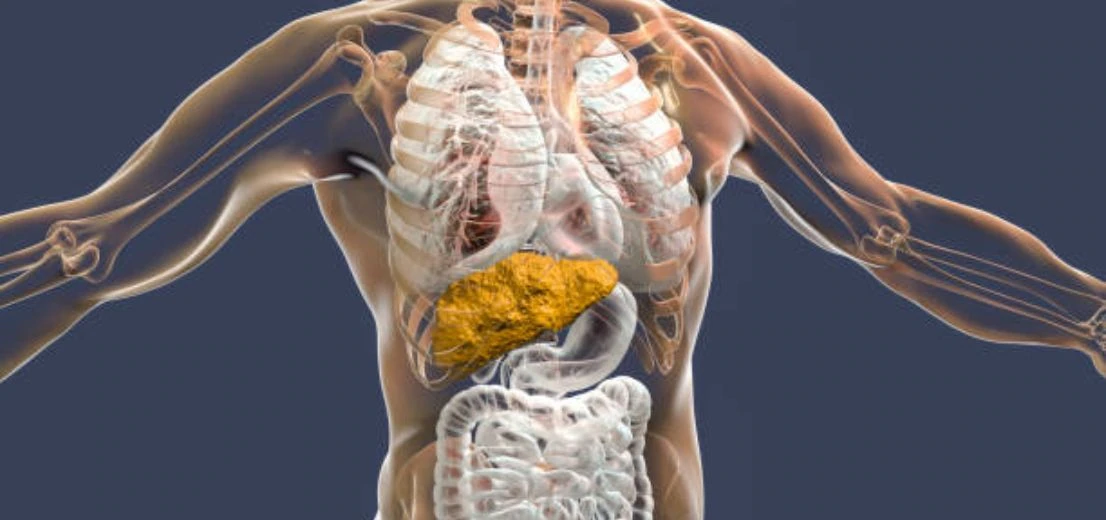
Liver fibrosis refers to the gradual buildup of scar tissue inside the liver after repeated injury or inflammation. The condition is also called hepatic fibrosis or fibrosis of the liver.
In simple terms, the liver responds to ongoing damage the same way the body responds to a wound. It tries to repair itself. During that repair process, collagen and fibrous tissue begin accumulating in areas where healthy liver cells were previously functioning.
At first, the liver may still work relatively well because healthy tissue can compensate for mild scarring. But persistent inflammation changes the structure of the liver over time.
This is why liver scarring becomes concerning. Scar tissue is much less flexible and functional than healthy liver tissue. Blood flow through the liver may gradually become restricted, and normal detoxification processes may become less efficient.
Importantly, liver fibrosis is not liver cancer. It is not a tumor either. It is a chronic scarring response linked to long-term injury.
In earlier stages, hepatic fibrosis may still improve if the underlying trigger is identified and controlled. That possibility becomes more limited once scarring becomes severe.
One reason liver fibrosis often goes undetected is that early liver fibrosis symptoms are usually vague. Some people experience no symptoms at all.
Others may notice small physical changes that do not immediately appear connected to liver disease.
Common early liver fibrosis symptoms may include:
These symptoms are easy to dismiss. Fatigue, for example, can easily be blamed on stress, lack of sleep, work schedules, or aging.
As liver scarring progresses, symptoms tend to become more noticeable.
More advanced hepatic fibrosis may interfere with circulation, metabolism, and toxin removal. At that point, the signs of liver fibrosis can become harder to ignore.
Possible symptoms include:
Many of these signs appear only after significant liver damage has already developed.
That silent progression is one reason doctors emphasize early monitoring in people with known risk factors.
Liver fibrosis has been directly associated with inflammation and repetitive injury to the liver over time. The latter can be caused by any of several medical conditions.
Often, there is not only one single factor in an individual's case; there can be multiple, and they may co-exist.
Main Causes of Liver Fibrosis:
Metabolic Liver Disease
Obesity-associated fatty liver disease, insulin resistance, hypercholesterolemia, and type 2 diabetes have emerged as some of the biggest causes of liver scarring across the globe. If there is too much fat inside the liver cells, the liver may get inflamed, and subsequently, this will be the cause of the scar tissue. When inflammation becomes more severe and in a condition called nonalcoholic steatohepatitis (NASH), it is more closely associated with progressing liver scarring.
Alcohol-Related Liver Injury
Long-term use of heavy amounts of alcohol remains a prominent factor contributing to hepatic fibrosis.
The body breaks down alcohol into toxic compounds, which may damage liver cells repeatedly, leading to fibrosis replacing the functional liver tissue.
Viral Hepatitis
Chronic infections with Hepatitis B and C are some of the largest causes of fibrosis.
They may have a long period of quiet inflammation in the liver, with the infected individual often not realising that there is a problem until liver tests demonstrate that it is abnormal.
Autoimmune Diseases
Some autoimmune diseases trigger the body's own immune system to damage the liver. Examples include: Autoimmune Hepatitis, Primary biliary cholangitis, Primary sclerosing cholangitis. Ongoing damage by the immune system will lead to an increasing level of scarring.
Genetic & Metabolic Diseases
Certain genetic diseases affect the storage and elimination of minerals or waste products from the body, thereby increasing the risk of fibrosis. These include Hemochromatosis, Wilson's disease, and Alpha-1-antitrypsin deficiency.
Bile Duct Diseases
Diseases affecting the drainage of bile from the liver may also lead to fibrosis. When there is an obstruction or ongoing inflammation of the bile ducts, damage to the surrounding liver tissue can lead to hepatic fibrosis.
Symptoms may stay mild for years, and doctors often rely on testing rather than symptoms alone.
Routine blood work can identify elevated liver enzymes or changes associated with inflammation.
Ultrasound, MRI, CT scans, and FibroScan testing may help estimate liver stiffness and scarring.
In some cases, a liver biopsy is performed to examine tissue directly under a microscope.
Not every patient requires a biopsy, but it may still be useful in selected situations.
Doctors commonly describe fibrosis using stages ranging from F0 to F4.
Little or mild scarring is present. Liver function often remains relatively normal.
Scar tissue becomes more established and begins affecting liver structure.
At this stage, liver scarring spreads more extensively, and circulation through the liver may become increasingly impaired.
This is widespread, extensive, and severe scarring. The liver damage is then irreversible, and complications increase.
The normal process of liver fibrosis is a slow progression rather than a fast one. Persistent inflammation causes damage to liver tissue over a long period of years without necessarily any signs or symptoms.
Prompt treatment is still relevant to slow or minimize further scarring by addressing the original cause.
Over time, untreated liver scarring can begin to affect major liver functions.
The liver plays a role in detoxification, metabolism, protein production, hormone regulation, and circulation. Severe fibrosis can interfere with all of these processes.
Scar tissue may increase pressure inside the portal vein system. This condition can create enlarged veins and raise the risk.
Fluid buildup inside the abdomen is common in advanced liver disease and may cause discomfort or swelling.
When the liver cannot effectively remove toxins, those toxins may affect brain function. Confusion, memory issues, and concentration problems can occur.
Extensive fibrosis may eventually impair the liver's ability to support normal body functions.
Long-standing hepatic fibrosis and cirrhosis are associated with a higher risk of liver cancer.
Discover the latest developments in Galectin-3 biology and emerging fibrosis research at Bioxytran.
Current treatment approaches for liver fibrosis focus mainly on controlling the underlying disease.
That may involve:
Researchers are also studying therapies designed specifically to interrupt the fibrosis process itself.
Scientists continue exploring medications that may reduce collagen buildup and inflammatory signaling linked to chronic organ scarring.
One growing area of interest involves Galectin-3, a protein associated with inflammation, fibrosis, and immune signaling.
Research suggests Galectin-3 may contribute to fibrotic activity in the liver, lungs, kidneys, and heart. Investigational therapies targeting Galectin pathways are being studied in conditions connected to chronic inflammation and organ fibrosis.
Some biotechnology groups are evaluating carbohydrate-based galectin antagonists and related anti-fibrotic compounds in preclinical and clinical settings.
Research in glycobiology and inflammatory signaling pathways continues to expand understanding of how liver scarring develops at the molecular level.
While many therapies remain under investigation, researchers continue looking for ways to slow fibrosis progression before irreversible damage develops.
Several practical habits may help lower the risk of progressive liver scarring.
Weight management may reduce fatty liver disease risk and improve metabolic health.
Reducing alcohol exposure can help decrease ongoing liver injury.
Diabetes and metabolic dysfunction are closely connected to chronic liver inflammation.
Testing for hepatitis B and C can help identify infections earlier.
Individuals with obesity, diabetes, alcohol-related liver disease, or chronic hepatitis may benefit from periodic liver evaluations.
Liver fibrosis is more common than many people realize, yet it often develops quietly over time. Because early liver fibrosis symptoms can be minimal or absent, the condition may progress unnoticed for years.
The good news is that fibrosis of the liver is not always permanent, especially during earlier stages. Identifying the underlying cause and taking action early may help slow progression and reduce long-term complications.
Ongoing research into inflammation pathways, Galectin-3 activity, and anti-fibrotic therapies is also expanding scientific understanding of chronic liver disease and potential future treatment approaches.
Companies like Bioxytran, Inc. continue exploring research connected to Galectin-3 activity, inflammatory signaling pathways, and fibrosis-related therapeutic development as scientific understanding of chronic liver disease and organ fibrosis continues to evolve.
Awareness, timely diagnosis, and consistent medical care remain some of the most important tools for protecting long-term liver health.
Liver fibrosis means there is a buildup of scar tissue because the organ gets injured over and over, or it stays inflamed for a long time. After a while, the healthy liver parts can get replaced by firm fibrous tissue.
In the beginning, liver fibrosis symptoms can be mild, or sometimes there are basically none. Some people notice fatigue, general weakness, a diminished appetite, or a bit of vague discomfort in the belly area.
The most common reasons include fatty liver disease, ongoing alcohol consumption, chronic hepatitis B and hepatitis C infections, autoimmune liver conditions, and a few inherited metabolic problems.
Sometimes, yes. Early-stage liver fibrosis may improve if the root cause is found quickly and treated. Certain lifestyle adjustments and medical therapy can, in some cases, slow things down and even reduce the severity of the injury.
When it progresses, signs of advanced liver fibrosis may show up as jaundice, swelling in the abdomen, confusion, bruising more easily, trouble holding fluids, plus a mix of symptoms linked to cirrhosis or liver failure.