Bioxytran · Founder story
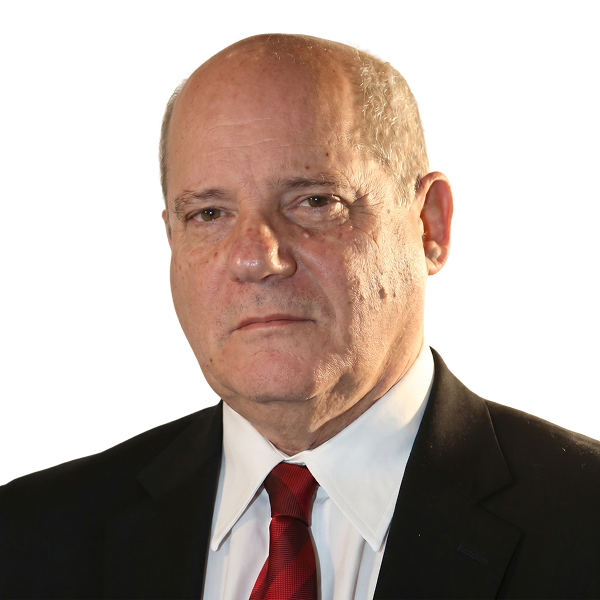
David Platt PhD
Four decades on a single question: what happens when a sugar meets a protein?
In the early 1990s, a chemist in a Detroit lab was working on a protein most of medicine was ignoring, and on the sugars it binds2, 7, 20. Today that protein family is the subject of thousands of scientific papers4, 8.
And the man who named it is still working on it.
The language no one was reading
Every cell in the human body is coated in sugar. Not the kind in your coffee, but complex, branching chains of carbohydrates. For most of the 20th century, science treated these sugars as mere packaging. Genes and proteins were the stars of the show.
David Platt didn't see packaging. He saw a language.
I fell in love with chemistry back in high school. I enjoyed picturing molecules in my mind and exploring how they combine. That way of thinking became the foundation for all of my research. Before I run an experiment, I build it in my mind first. That is also how I plan the manufacturing of a compound and how I prepare a clinical trial protocol. This habit has allowed me to come up with a wide range of inventions and bring them to life.
Early in my university studies, I decided to specialize in carbohydrate chemistry because I heard it was a very promising field. I also heard it was extraordinarily difficult, because of the immense complexity of these molecules. That didn't scare me at all; on the contrary, it was an exciting challenge. I was fortunate to study with teachers who were early pioneers in the field. From them I learned how vital sugars are to the body, and I became fascinated by their ability to recognize specific molecules and bind to them.
After earning his PhD in chemistry from the Hebrew University of Jerusalem and serving as a research fellow at the Weizmann Institute, he moved to Detroit in 19891, 2. There, he joined the early work on a galactose-binding protein, and in 1993 was among the authors of the study describing its recombinant form and structure20. The world now calls it galectin-3.
In my engineering degree I realized how important complex carbohydrates are to keeping the cell wall intact. For my master's thesis I set out to separate and characterize an ADP-binding protein from turkey red blood cells, and to do it I developed a separation technique based on complex carbohydrates. My interest grew into understanding the nature of that binding, and for my PhD I decided to concentrate on the polysaccharides in plant cell walls called pectins.
During my PhD I created modified citrus pectin. In my postdoctoral work I used it to block a lectin on cancer cells that helps them spread. I called that protein Gal-Lectin. The family is known today as galectins, and the name appears in thousands of papers. I used this knowledge to develop a drug candidate. Its clinical program showed early promise before it was halted for financial reasons; a version of the molecule is sold today as a dietary supplement.
In 1992, with Avraham Raz, he co-authored the paper that showed why it mattered7. Tumor cells were using these carbohydrate-binding proteins like hands to grip tissue and spread. Build a sugar shaped to block that grip, and you could interfere with the disease.
That paper opened the door to galectin-targeted therapy8, 9.
The obsession
Most scientists narrow their focus as they age. Platt did the opposite. His expertise wasn't a single disease; it was a mechanism: "the recognition between carbohydrate and protein"10. Once you know how to build a sugar to block a protein, you just have to find the right proteins to target.
I was among the first to try developing drugs from sugar molecules. It was a very difficult undertaking, because my inventions did not yet have a solid theoretical foundation or sufficient measurement tools. Today they do. The molecules I design are built to be well tolerated: the body does not treat them as a harmful invader.
Right from the beginning it was clear to me that carbohydrates are the basis of evolution. When T cells lacking both CD4 and CD8 turned out to be infectable by HIV, I realized that lectins on the T cells were probably letting the virus in. That lectin, a protein that recognizes sugars, was identified later. In 1992 I developed complex-carbohydrate antagonists and presented the animal data to Dr. Anthony Fauci at the NIH. In three hundred experiments in a mouse model of AIDS at the University of Kentucky Medical School, we could no longer detect the virus in the treated animals. The NIH did not take up our request for a grant to continue the research.
- Cancer. If a sugar could block a tumor's grip, it could also carry chemotherapy directly to the source, sparing healthy cells10, 11. In his words: "The sugar molecules I work with don't just recognize and bind to other molecules; they can also wrap around them and carry them to a chosen target. Early clinical trials suggested this could help chemotherapy reach the cancer with fewer severe side effects."
- Diabetes. The enzymes that break down dietary sugars are themselves carbohydrate-handling proteins. One well-designed molecule could act as a "better mouse trap" to block them, designed to reduce the amount of sugar entering the bloodstream10, 13.
- Oxygen. A carbohydrate-modified hemoglobin molecule designed to carry oxygen similarly to natural hemoglobin, being developed for blood loss, ischemia in organs such as the heart, liver and kidneys, and the preservation of organs for transplantation13, 14.
- Viruses. In 2020, he saw that viruses, too, use sugar-binding proteins to invade human cells. He reformulated a galectin antagonist into an oral antiviral, since studied in two randomized controlled COVID-19 trials14.
Four decades. One core mechanism. A relentless pursuit to outsmart disease.
The garage in Newton
Great science rarely happens without a fight.
In the 1990s, Platt built his first company around his carbohydrate research3, 15. By 1999, the clinical trials were promising and the stock was rising. Then came the disputes over who truly owned the patents. By mid-2000, he was dismissed by the board he had chaired3.
What he did next is the defining moment of his career.
He didn't write a book about it. Less than six weeks after being fired, he filed the paperwork for a new company. He ran it out of his garage in Newton, Massachusetts3.
Three years later, in September 2003, the company moved to the American Stock Exchange, and he rang the opening bell3, 21. He ultimately retained power of attorney over the original patent applications, and the trade-secret claims against him were dismissed in court15, 16. The science left with the scientist, and the scientist kept working.
What he built. What he lost.
There are two ways to tell the story of David Platt's career.
One is the version written in company histories: five publicly traded companies, patents bearing his name, and drug-development programs carried forward by organizations he no longer led.1, 12, 13, 17
The other is harder to fit into a résumé.
Beyond the loss of corporate leadership, the disputes also affected who could guide the future of research Platt had spent years developing.
As he started over, research he had helped create continued elsewhere. Cancer and liver-fibrosis programs associated with his earlier work progressed within companies he no longer led, with his name still appearing on relevant patents.12, 13
Imagine dedicating years of your life to understanding a molecule, then watching other people make decisions about what becomes of that work.
Your name may remain on a patent. The science may continue. But neither gives you back the chance to guide its future.
For Platt, being an inventor did not always mean being able to keep control of what he had built.
He could lose a company. He could lose his place at the table. But he did not abandon the questions that had brought him there.
The work continues
Today, Platt is the founder, Chairman and CEO of Bioxytran, Inc.1, 5. The company is built on his lifetime of work, driving forward two platforms: Glycovirology and a Universal Oxygen Carrier6, 14.
Even now, the cancer question he first asked in 1992 remains open on his desk, with new research published in 2025 proposing galectin-3 as a key driver of resistance to immunotherapy19.
Eleven thousand publications since 1992 have tied galectins to nearly every disease known to medicine. The key is how to block some of them, together or one at a time. In cancer, galectins mask the cell from destruction by the immune system; block them, and other therapies have a better chance to do their work. The problem was always the challenge of making the correct chemical structure, built from sugars, to block the correct galectins.
Now I am fulfilling my dream of taking an intellectual intuition, an idea that sparked in my mind, and developing it into products for the people who need them. That's what keeps me going every day: taking something that started as pure curiosity and watching it turn into something that helps people. That has always been my dream.
— David Platt
This page describes historical research and investigational programs. It does not establish the safety or clinical effectiveness of Bioxytran's investigational drug candidates, which are not FDA-approved for the uses described. A-SUQAR and V-LO are dietary supplements and are not intended to diagnose, treat, cure, or prevent any disease. Forward-looking statements are subject to risks and uncertainties described in Bioxytran's SEC filings.
Research & references 21 sources
- MarketScreener, David Platt — positions and history.
- Drug Discovery News, Carbohydrate-based answers for diabetes, hypoxic tissue and cell death.
- The Boston Globe, 14 March 2004, David Platt wants to cure cancer. Can his company avoid life support?
- David Platt, LinkedIn post on the 1989 expression of Gal-Lectin-3.
- Bioxytran, Inc., David Platt, PhD — author page.
- Bioxytran, Inc., Company.
- Platt D, Raz A. "Modulation of the lung colonization of B16-F1 melanoma cells by citrus pectin." Journal of the National Cancer Institute 1992;84(6):438–442. doi:10.1093/jnci/84.6.438
- BioTuesdays, 29 July 2025, Bioxytran disrupting infectious disease and inflammation with carbohydrate-based therapeutics.
- Klyosov AA, Witczak ZJ, Platt D (eds.). Galectins. Wiley, 2008. ISBN 978-0-470-37318-7. Publisher page
- Diabetes in Control, Dr. David Platt — BTI320, a New Approach to Therapy.
- Pro-Pharmaceuticals, Inc., Annual Report on Form 10-K, fiscal year 2009, U.S. Securities and Exchange Commission.
- Galectin Therapeutics (formerly Pro-Pharmaceuticals), SEC filing on the February 2009 separation agreement.
- Drug Discovery News, as in [2].
- BioTuesdays, as in [8].
- Pro-Pharmaceuticals, Inc., press release of 12 November 2004, SEC Exhibit 99.2.
- Pro-Pharmaceuticals, Inc., press release of 17 July 2009, SEC Exhibit 99.1.
- Bioxytran, Inc., Management, Board of Directors and Advisory Board.
- Bioxytran, Inc., Executive Informational Overview, 26 August 2022.
- Bioxytran, Inc., press release via BioSpace, Bioxytran's Cancer Preprint Reveals Potential to Enhance Most Immunotherapy Drugs.
- Ochieng J, Platt D, Tait L, Hogan V, Raz T, Carmi P, Raz A. "Structure-function relationship of a recombinant human galactoside-binding protein." Biochemistry 1993;32(16):4455–4460. PubMed 8476870
- Pro-Pharmaceuticals, Inc., press release of 9 September 2003, SEC Exhibit 99.1 (listing on the American Stock Exchange, ticker PRW, trading from 10 September 2003).


